Acid Washing or Bead Blasting: What Your Pool Needs
Wondering if your pool needs an acid wash, bead blasting, or new tile? Learn how we decide the right fix for stains or calcium build up
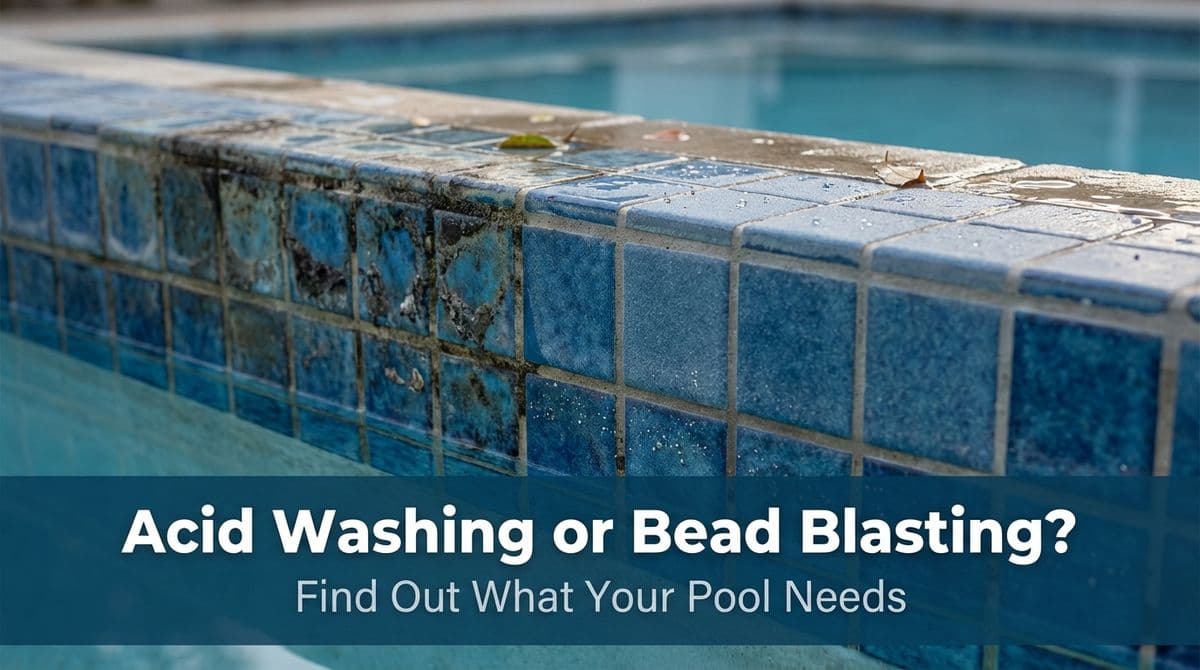
Acid Washing vs. Bead Blasting: What We Suggested on a Recent Call
We recently got a call from a customer, who wanted to get on our schedule for a drain and acid wash. He told us his pool water needed to be drained and refilled, he had some minor staining on the bottom, and there was calcium buildup on his tile. He wasn’t totally sure if an acid wash was the right solution; he just knew things were looking tired.
As we talked, he also mentioned he thought his tile might need to be replaced and wasn’t sure how far to go: “Do I need an acid wash? A tile cleaning?” That’s a question we hear a lot, so we walked him through how we look at stains and calcium deposits.
In this post, we’ll walk you through the same explanation we gave our customer, so you can decide what your pool really needs.
What an Acid Wash Actually Does (and Doesn’t Do)
When most homeowners say they “need an acid wash,” they usually notice:
Discoloration or mottling on the bottom and walls of the pool
Stubborn stains that don’t brush away
A generally dingy look, even when the water is clear
An acid wash is designed for exactly that. We drain the pool, then apply a diluted muriatic acid solution to the plaster or pebble surface. The acid removes a very thin top layer of material, which takes embedded stains, algae pigment, and mineral discoloration with it.
Acid washing is best for:
Organic stains (leaves, algae, dirt)
Light rust or metal stains
General “gray” or yellowed plaster
Pools that haven’t been drained and cleaned in many years
Acid washing does not clean your tile line. That was one of the first things we clarified for Mark. The stains and color on the pool surface and the white crusty ring on the tile are related to chemistry, but they’re treated very differently.
Bead Blasting: How We Remove Calcium on Pool Tile
That white, chalky buildup along the waterline that Mark mentioned is almost always calcium scale. It happens when hard water, high pH, or evaporation leave minerals behind right at the waterline. Over time, it can turn into a thick, rough band that’s tough to scrub off.
For that, we use a process called bead blasting (sometimes called media blasting). As we explained on the call, this is a completely separate service from an acid wash.
How bead blasting works:
We keep the water level just below the tile line or drain a bit if needed.
Using special equipment, we gently “blast” the tile with fine glass beads or similar media.
The media knocks off the calcium deposits without damaging the tile glaze in normal conditions.
We vacuum and clean up the spent media and debris.
When we told the customer about bead blasting, it helped him understand why tile cleaning is scheduled and priced separately from an acid wash. One service focuses on the plaster or pebble surface and the other focuses on the tile at the waterline.
How to Decide: Acid Wash, Bead Blast, or Tile Replacement?
When we’re helping a homeowner choose the right service, we usually break it down into three simple questions:
Where is the problem?
Bottom and walls = acid wash. Waterline tile = bead blasting. Cracked/loose tile = likely replacement.How bad is it?
Light staining or a thin white ring = cleaning. Deep discoloration, thick flaky calcium, or broken tile = cleaning plus possible repair or replacement.What’s your goal?
Just make it look better for a season, or refresh the pool for the next 10–15 years? Your timeline and budget help us recommend the right level of work.
For this situation, we suggested a drain and acid wash to tackle his surface staining and a separate bead blast quote for the tile. From there, we could evaluate on-site whether the tile was still in good shape or really ready for replacement.
Tips to Reduce Future Stains and Calcium Buildup
Whether you choose acid washing, bead blasting, tile replacement, or a combination, there are a few habits that will help keep things looking good longer:
Keep your water chemistry balanced – Proper pH, alkalinity, and calcium hardness slow down staining and scale.
Brush regularly – A quick brush along the tile line and walls helps prevent buildup from getting a foothold.
Address metals and hard water – If you have very hard fill water, ask us about strategies to manage calcium levels over time.
Schedule periodic professional cleanings – Smaller, more frequent cleanings are usually gentler and cheaper than waiting until everything is heavily stained.
If you’re looking at your pool and wondering, like our customer did, whether you need an acid wash or a bead blast, we are happy to take a look and give you honest options based on what we see in person.