How to Choose the Right Cartridge Pool Filter Size
Confused about cartridge pool filter sizes and cleaning schedules? Learn how to pick the right size for your pool and how often you really need to clean it.
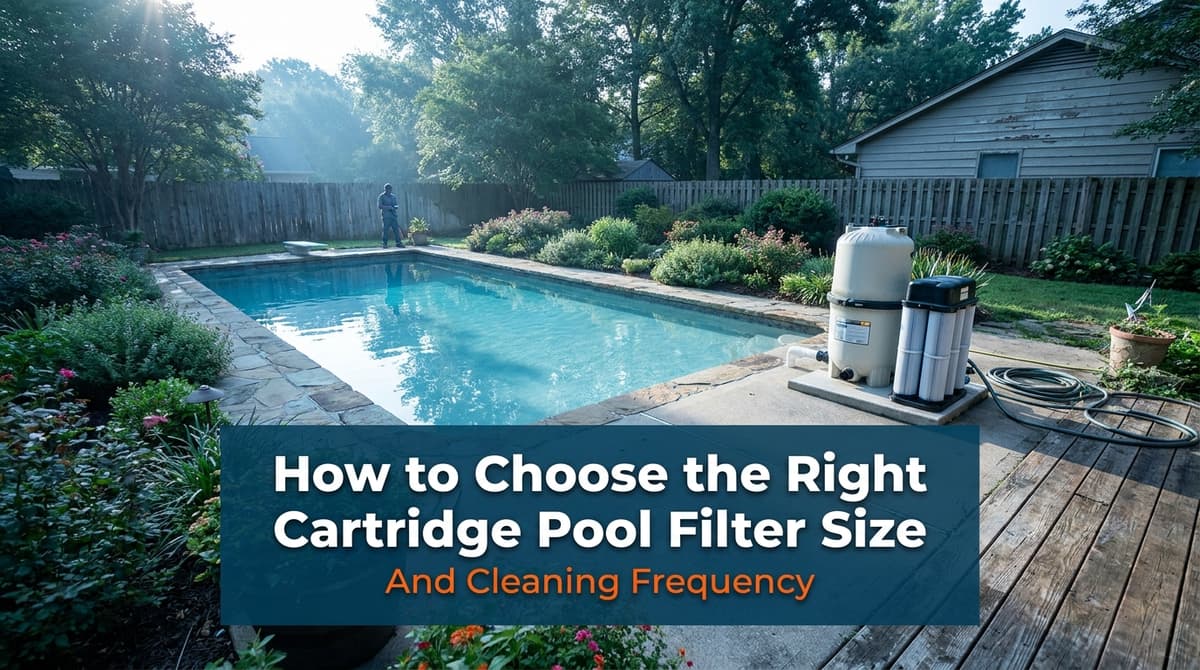
Helping a Homeowner Make Sense of Pool Filter Sizing
We recently got a call from a customer — let’s call him Mark — who was doing his homework on replacing an older cartridge pool filter. He had a Purex Triton six-cartridge setup on his in-ground pool and was calling around to compare quotes for a repair or full replacement.
On the phone, Mark asked a question we hear a lot: “That 420 number on the new filter — that’s square feet, right? And will a bigger filter mean I don’t have to clean it as often?” He also mentioned his pool was about 15,000 gallons and that he currently cleaned his cartridges about once a quarter.
That conversation is a perfect example of how confusing filter sizing and maintenance can feel. So in this post, we’ll walk you through how we think about choosing the right cartridge pool filter size — and how often you really need to clean it.
What “420” (and Other Filter Sizes) Really Mean
When Mark asked about the “420,” he was referring to a very common size: a 420-square-foot cartridge filter. That number is the total surface area of the cartridges inside the housing.
In simple terms:
- More square footage = more filter media for water to pass through
- More filter media = slower water velocity and better dirt-holding capacity
- Better dirt-holding capacity = longer time between cleanings
Mark’s instinct was right: for a typical 10,000–20,000 gallon residential pool, a 420 sq. ft. cartridge filter is considered a larger filter that gives you more “breathing room” on maintenance.
How Big Should Your Cartridge Filter Be?
When we size a cartridge filter, we look at three key things: pool volume, pump flow rate, and how you use the pool.
1. Pool Volume (Gallons)
For most residential pools, these rough guidelines work well:
- Up to 10,000 gallons: 200–300 sq. ft. cartridge
- 10,000–20,000 gallons: 320–420 sq. ft. cartridge
- 20,000–30,000+ gallons: 420–520+ sq. ft. cartridge
Mark’s pool is around 15,000 gallons, so a 420 sq. ft. four-cartridge filter was right in the sweet spot.
2. Pump Flow Rate
The other big factor is how much water your pump is pushing through the filter. Most filters have a maximum flow rate, and you never want the pump to exceed that for long periods.
To get a rough idea from your pump label:
- Look for the pump model number on the motor sticker.
- Search that model online for its flow rate curve (usually shown in gallons per minute, or GPM).
- Compare that to your filter’s listed maximum GPM on the spec sheet.
If your pump’s typical flow is at or below the filter’s max rating, you’re in good shape. If the pump is significantly stronger than the filter’s rating, either the pump should be turned down (variable speed) or the filter should be upsized.
3. How You Use the Pool
We also asked Mark about his cleaning habits and how often the pool gets used. That matters more than people think:
- Heavy use (kids, parties, lots of sunscreen): go larger on the filter
- Leafy yards or lots of dust: larger filter, or more frequent cleanings
- Light use, covered pool: standard sizing is usually fine
Our philosophy is simple: it’s almost impossible to oversize a cartridge filter for a residential pool, but it’s very easy to undersize one and end up cleaning constantly.
How Often Do You Really Need to Clean a Cartridge Filter?
On the call, Mark mentioned he cleans his cartridges quarterly, and that’s actually right in the normal range. We typically see:
- Properly sized larger filters (320–520 sq. ft.): every 3–6 months
- Smaller or undersized filters: every 1–3 months
Rather than the calendar, we like to use the pressure gauge as the real indicator. Here’s the rule of thumb we shared with Mark:
- Note the clean starting pressure right after you clean the filter (say 12 psi).
- Clean the filter again whenever the pressure rises by 8–10 psi over that baseline (so around 20–22 psi in this example).
That method works regardless of season, bather load, or weather — and it keeps your pump from working harder than it has to.
Quick Checklist to Size Your Own Cartridge Filter
If you’re like Mark and want to do a little homework before you call us, here’s a simple step-by-step checklist you can follow:
- Estimate pool volume. Length × width × average depth × 7.5 (for rectangular pools) will get you close.
- Write down your pump model. Grab the make and model off the motor label and keep it handy.
- Look up filter sizes. For most 10,000–20,000 gallon pools, start your search in the 320–420 sq. ft. range.
- Check flow ratings. Compare your pump’s GPM to the filter’s max GPM from the manufacturer’s specs.
- Consider your yard and usage. Lots of debris or heavy use? Choose the next size up.
- Plan your cleaning schedule. After installation, record clean psi and use the +8–10 psi rule for future cleanings.
If any of those steps feel overwhelming, that’s where we come in — we often have customers text us photos of their equipment pad so we can do the matching for them, just like we asked Mark to do.
Cartridge vs. Sand and DE: Does Sizing Work the Same?
Mark’s existing system was cartridge, and he wanted to stay with that style. That’s usually a good call for most backyards, but it helps to understand how cartridge compares to other filters:
- Cartridge filters: Great filtration, relatively low resistance to flow, and no backwashing. You clean by removing and hosing off the cartridges a few times a year.
- Sand filters: Easier to use but don’t filter quite as finely. They’re sized by tank diameter and backwashed when pressure rises. Often smaller footprint, but more frequent backwashing.
- DE (diatomaceous earth) filters: Very fine filtration, but more maintenance and chemical handling. They’re also sized by square footage, but cleaning and recharging with DE is more involved.
The general principle is similar across all three: larger filtration area and adequate flow matching mean fewer headaches. That’s why, when replacing older equipment, we often nudge people a bit larger on filter size than what was installed 10–20 years ago.
When to Call in a Pro
In Mark’s case, we asked him to text us photos of his pump, filter, and the whole equipment pad, plus one shot of the pool. From there, our technician could put together a quote that included the right size four-cartridge filter and labor for the swap-out.
If you’re not sure what size you need, or you’re debating between repairing an older unit and replacing it with something newer and larger, feel free to reach out. We’re always happy to look at your setup, walk you through the numbers, and help you land on a cartridge filter that keeps your water clear without turning you into a full-time filter cleaner.