Signs of a Clogged Pool Suction Line & Pump Damage
Is your pool pump basket not filling and your cleaner barely moving? We explain the warning signs of a clogged suction line and how it can burn out your pump.
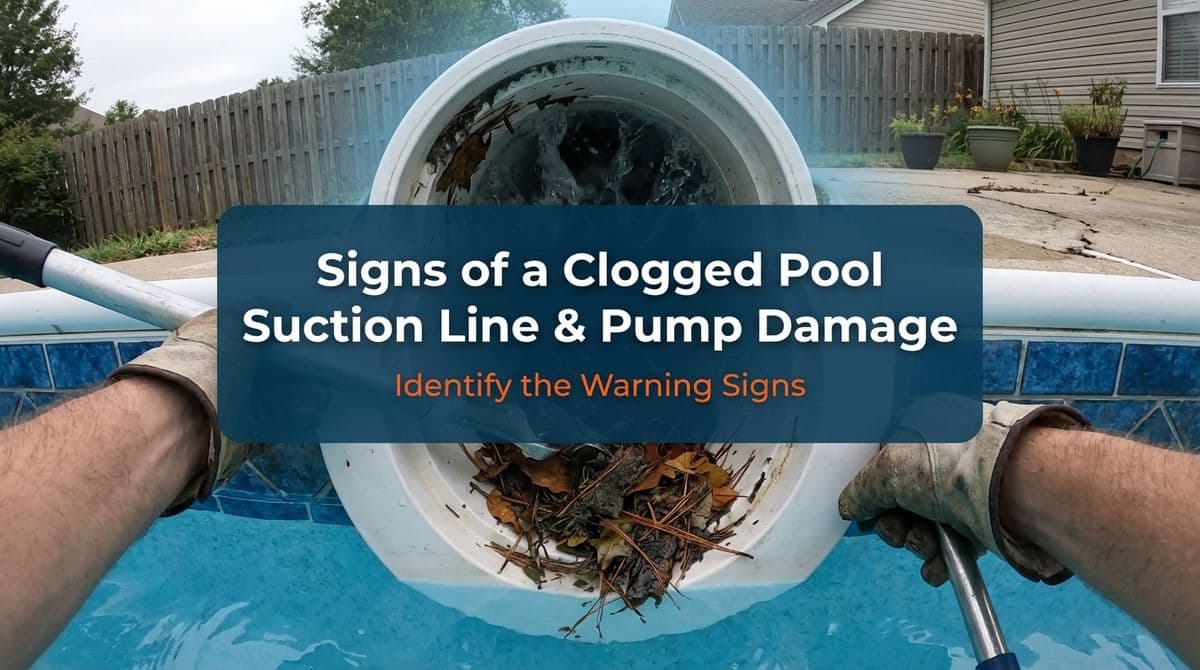
When a Clogged Suction Line Knocks Out Your Pool Pump
We recently got a call from a customer — let’s call her Lisa — here in town. She told us, “I think there’s a clog in the suction line, and now my pump motor won’t even turn on.”
As we asked a few questions, the story got familiar fast. Lisa said her pump basket hadn’t been filling with water for a while. The system was still running, but there was only a little water in the basket, her in-floor pop-ups weren’t cleaning like they used to, and the pool stayed full of leaves and dirt. After a few months of that, the pump motor finally stopped responding altogether.
We see this pattern a lot: a clogged suction line slowly starves the pump of water, and if it’s left running that way, the motor can overheat and burn out. In Lisa’s case, we scheduled a visit, explained our trip charge and inspection process, and planned to diagnose both the clog and the pump.
Since we run into situations like this all the time, we thought we’d walk you through how we spot a clogged suction line — and how letting it go can damage your pump.
How We Recognize a Clogged Pool Suction Line
On the phone with Lisa, the first thing we asked was, “Was your pump basket filling with water?” That question matters because low or no water in the pump basket is one of the biggest red flags we look for.
Here are the signs we pay attention to when we suspect a suction-side clog:
- Pump basket not filling properly
Like Lisa, many customers tell us, “There’s a little water in there, but not the normal amount.” When everything is working right, that basket should be full of water, with just a small air bubble at most. - Difficulty priming the pump
We asked Lisa, “You just weren’t getting any prime to your pump?” When a pump struggles to catch and hold prime — or keeps losing prime — we immediately think about suction issues. - Weak or no movement from pop-ups or cleaners
Lisa’s pool used an in-floor pop-up system. She noticed they weren’t pushing dirt and leaves into the drain like usual. If you have pop-ups or a suction cleaner and they seem lazy or dead, we look for a restriction on the suction side. - Dirty pool despite long run times
Lisa said her system was running, but the pool “still had a ton of leaves and dirt in it.” If your timer is set correctly and the pool is still filthy, we suspect water just isn’t moving like it should.
What We Ask Before We Come Out
On every call like Lisa’s, we walk through a few quick questions. This helps us get a feel for what’s going on even before we see the equipment:
- How long has the pump been struggling to prime?
Lisa told us it had been happening “for several months.” That’s important because running that long with poor flow puts the motor at high risk. - Has the system been running daily anyway?
In Lisa’s case, yes — the system was running. That means the motor has likely been running hot, trying to pull water through a restricted line. - Does the pump motor do anything at all now?
Lisa said the motor “isn’t responding to anything.” When we hear that, we start thinking about breakers, capacitors, and the possibility of a burnt-out motor.
By the time we arrive, we already have a pretty good idea whether we’re dealing with a simple clog, a motor problem, or both.
How a Clogged Suction Line Can Burn Out Your Pump
Here’s what we explained to Lisa, and it’s the same thing we tell any customer in this situation: your pump is designed to move water, not air.
When the suction line is clogged or badly restricted:
- The pump can’t pull enough water from the pool.
- The pump pot doesn’t fill, so the impeller starts spinning in mostly air.
- Water flow through the pump (which cools and lubricates it) drops way down.
- The motor runs hotter and hotter, sometimes tripping the breaker.
- If it keeps running like that, internal components can overheat and fail.
That’s why, on the phone, we told Lisa, “Hopefully, you didn’t burn your motor out… but if it was running that long with it clogged, you definitely could have burnt it out.” We always try to prepare folks for both possibilities: clearing the clog and possibly replacing or repairing the pump motor.
What We Recommend You Check Before You Call Us
There are a few simple things you can safely check before you call us out, and here’s what we recommend:
- Empty skimmer and pump baskets
Make sure skimmer baskets and the pump basket are clean and seated properly. A basket jammed in crooked can restrict water flow. - Check your water level
If the pool water is too low, the skimmer can suck in air instead of water, making it look and sound like a clog. - Look at your valves
Confirm that suction valves for the skimmer and main drain are open and not halfway closed by mistake. - Reset the breaker
If the pump suddenly won’t turn on at all, check your electrical panel and gently reset the breaker once. If it keeps tripping or the pump stays dead, stop there and give us a call.
If you go through those steps and the pump still won’t prime, or the basket won’t fill, that’s when we recommend bringing us in to diagnose a possible suction line clog.
What We Do When We Come Out
When Lisa agreed to have us out, we explained our trip charge covers the first hour on site. In that time, our technician’s job is to assess everything before anyone starts “ripping stuff apart.” We take the same approach with every homeowner.
On a visit like this, we typically:
- Inspect the pump, motor, and electrical connections.
- Check for obvious air leaks on the suction side (fittings, lids, o-rings).
- Test valves and flow from each suction port.
- Evaluate whether the motor is still healthy or has likely been damaged by overheating.
Once we know what we’re dealing with, we explain our findings, give you a clear quote for any additional work or parts, and only then move forward with repairs if you approve. Our goal is to get your pool circulating properly again and to keep your pump from becoming an expensive casualty of a hidden clog.
Don’t Ignore the Early Warning Signs
If your pump basket isn’t filling, your system keeps losing prime, or your cleaner and pop-ups have gone quiet while the pool gets dirtier, those are the same warning signs we heard in Lisa’s call. The sooner we track down a suction-side issue, the better the chance we can save your motor and avoid a bigger repair bill.
If you’re noticing any of these symptoms, reach out and let us walk through some questions with you — just like we did with Lisa — and if needed, we’ll get a technician out to diagnose and fix the problem before your pump calls it quits.