How Long Should Pool Cleaner Hoses Last in the Sun?
Wondering how long your pool cleaner hose should last? Learn typical hose lifespans, warning signs, when to replace sections, and tips to protect hoses from sun damage.
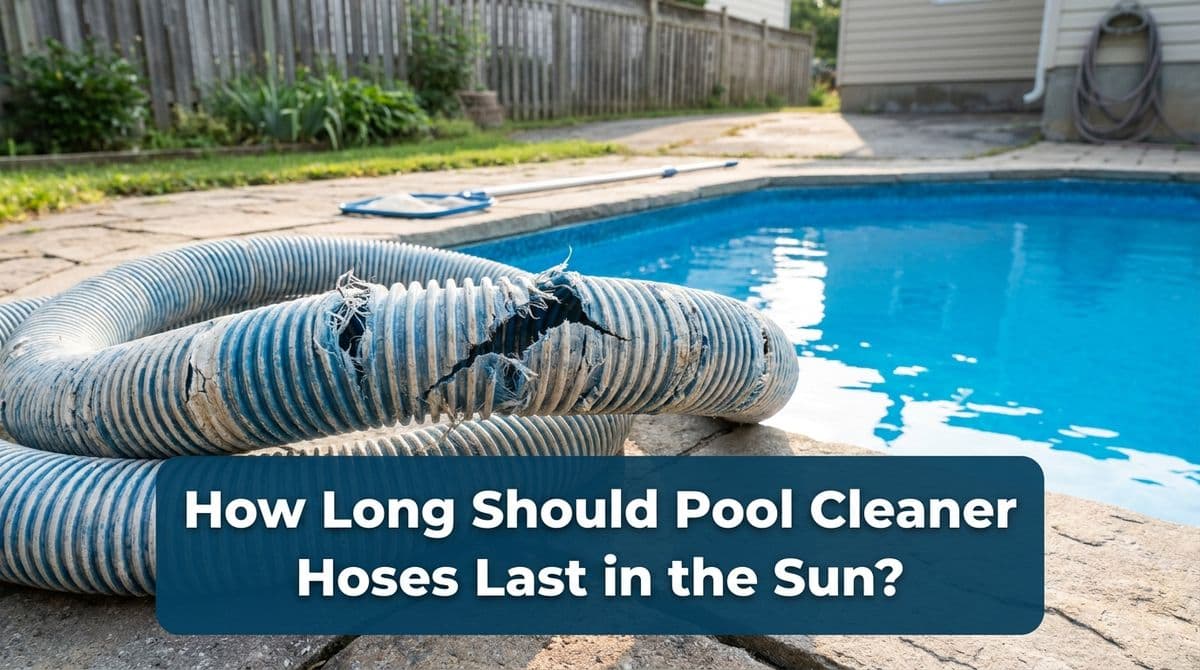
When a “Simple” Torn Hose Raises Bigger Questions
We recently got a call from a customer — let’s call him Mark — who has a Hayward four-wheel-drive pool cleaner. One of his hose sections had torn, and he wanted to know if we carried the gray replacement hoses he prefers, how they’re sold, and whether he should pick up a few extra sections as spares.
While we were talking, he asked a question we hear all the time: “Normally, how long do those hoses last in regular service before they start kinking up all the time and everything?” That’s when we realized this is something a lot of pool owners wonder about, especially here in the Arizona sun.
So we thought we’d walk through what we shared with Mark — how long pool cleaner hoses usually last, signs they’re wearing out, when it actually makes sense to replace them, and what you can do to help them last longer in full sun.
How Long Should Pool Cleaner Hoses Last?
Pool cleaner hoses don’t have a perfect “expiration date,” but in our climate we usually see a realistic lifespan of about:
- 1–2 years for standard vacuum/automatic cleaner hoses that stay in the water most of the season
- 6–12 months for hoses that are constantly left coiled on the deck in direct sun
When we spoke with Mark, we mentioned that hoses are “pretty common to go bad… definitely within like a year or two sometimes”, and the big culprit is exactly what we deal with every day: UV exposure and heat. The sun hardens the plastic, makes it brittle, and causes kinks and micro-cracks over time.
Other things that can shorten hose life include:
- Chemically imbalanced water (especially very low pH or very high chlorine)
- Rough pool edges or sharp tile the hose drags across
- Pets or wildlife chewing, clawing, or “investigating” the hose
- Improper storage (tight, twisted coils that set permanent kinks)
Understanding the Different Hose Sections
Another thing Mark asked about was why one hose piece looks different from the rest. When he buys them in a box, he notices there’s always one special section.
We explained that most automatic pool cleaners use:
- Standard hose sections – Usually 4-foot pieces that connect to each other in a chain
- Leader hose – The special section that connects directly to the cleaner head
The leader hose is designed to be a little more flexible and sometimes slightly different in diameter or construction so the cleaner can move properly. In Mark’s case, we let him know we carry standard hoses by the 4-foot section and that the leader hose has its own price and part because it’s not identical to the others.
If you’re replacing hoses, it’s worth double-checking whether you need just a standard section or that special leader hose as well. Swapping the wrong piece can cause poor cleaner movement or even damage over time.
Signs Your Pool Cleaner Hose Is Wearing Out
A lot of homeowners wait until a hose fully splits before replacing it. By then, your cleaner has usually been underperforming for weeks. Here are the early warning signs we look for when we’re out on route:
- Persistent kinking – The hose keeps folding in the same spot, even after you straighten it out
- Stiff or brittle feel – Sections that used to be flexible now feel hard and “crunchy”
- Discoloration – Extreme yellowing, chalky surface, or faded, powdery plastic
- Micro-cracks – Tiny surface cracks you can see when you bend the hose
- Air leaks – The cleaner loses suction or struggles to move, and you see bubbles where the hose is above water
- Frequent disconnects – Sections won’t stay securely snapped together
If we see more than one of these issues on a route visit, we’ll usually recommend at least partial hose replacement. Waiting until the hose actually rips can mean more debris in the pool and more strain on your pump.
When to Replace: One Section or the Whole Hose?
Mark’s first question was simple: he knew one 4-foot section was torn, and he wondered if he should just replace that piece or pick up a few extras. That’s a smart way to think about it.
Here’s how we usually advise homeowners:
- Replace a single section if the damage is limited and the rest of the hose is still flexible and in good shape.
- Replace multiple sections if several spots are kinking or showing cracks, even if they haven’t torn yet.
- Replace the entire hose set if everything feels brittle, discolored, or older than about 2–3 years in our sun.
We also check the leader hose closely. Since it connects directly to the cleaner and does a lot of bending, it can wear out faster than the rest. In Mark’s case, we talked through the fact that his leader hose has a different price and that it’s often replaced on its own when it starts to stiffen up.
How to Help Your Hoses Last Longer in the Sun
The sun is brutal on pool equipment here, but there are some simple habits that can add months — sometimes years — to your hose life.
1. Don’t Bake the Hose on the Deck
We know it’s tempting to just coil the cleaner hose on the pool deck and walk away. The problem is that concrete can easily hit 140°F+ in peak summer, and the hose is getting direct UV on top of that.
Instead, try to:
- Leave the cleaner in the pool if you run it regularly and your equipment setup allows it
- Store hoses in the shade — under a covered patio or in a simple hose hanger away from direct sun
- Avoid tight coils — use large, gentle loops so the plastic doesn’t “remember” a kinked shape
2. Rinse Off Chemical Residue
If you super-chlorinate or add shock directly to the pool, try not to leave the hose sitting right where the chemicals were poured in. After heavy treatments, we like to:
- Pull the hose out briefly and rinse it with fresh water
- Let it dry flat or in wide loops before coiling it back up
Balanced water is fine for your hoses; it’s the extremes that speed up breakdown.
3. Protect from Chewing and Damage
On Mark’s call, he mentioned the damage almost looked like it had been cut, and we see that too — anything from lawn tools to curious pets can beat up a hose fast.
To avoid surprise damage:
- Keep hoses away from where you trim, edge, or mow
- Discourage dogs from using the hose as a chew toy
- Watch for sharp coping or tile edges that might rub or slice the hose as the cleaner moves
4. Check and Rotate Sections
A simple maintenance tip we use on service routes: every few months, rotate the order of your hose sections. The pieces closest to the cleaner and closest to the wall fitting tend to work the hardest.
By swapping positions occasionally, you spread out the wear instead of letting the same section do all the bending until it fails.
Simple Hose Care Goes a Long Way
When Mark called, he mainly wanted to confirm that we carried his preferred gray hose sections and to check pricing. But once we walked through how long hoses typically last and how the sun affects them, he decided to pick up a couple of spares and keep a closer eye on his existing sections.
If your automatic cleaner suddenly isn’t doing its job, don’t forget to look at the hose. A few minutes of inspection — and a little bit of shade and smart storage — can keep your cleaner moving and your pool looking great without constant hose replacements.
And if you’re ever unsure whether you need a standard section, a leader hose, or a full replacement set, we’re always happy to take a look and point you in the right direction.