New Pool Owner’s Guide to DIY vs Pro Pool Maintenance
New pool owner and frustrated with DIY maintenance? Learn why home pool care often goes wrong and what a professional weekly service really includes.
“We Tried Taking Care of It Ourselves…”
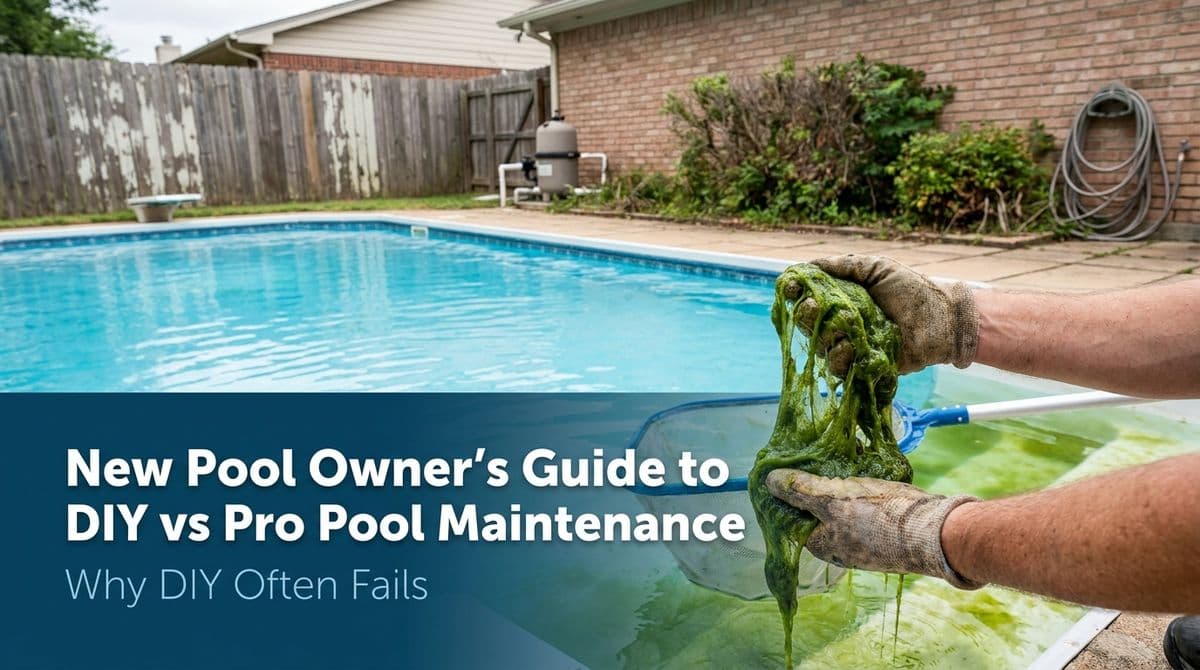
We recently got a call from a new pool owner — let’s call her Kelly — who had just moved into a home with a backyard pool. She’d been trying to handle everything herself with some advice from friends, a couple of YouTube videos, and a cart full of chemicals from the big-box store.
After a few weeks, the water started turning cloudy, the surface collected leaves and bugs faster than she could scoop them, and the pump sounded like it was working overtime. A neighbor’s parents have been using us for years, so they sent her our way.
On the phone, Kelly said something we hear all the time: “We’re new pool owners, we’ve been trying to do it ourselves, and it’s just not working out too well.” That conversation is exactly what inspired us to put together this guide for new pool owners who are wondering why DIY pool care so often goes sideways — and what a professional pool service actually includes.
Why DIY Pool Maintenance Often Fails for New Owners
Most new pool owners struggle not because they don’t care, but because pools are more complex than they look. Here are the biggest hurdles we see when we first visit a DIY-maintained pool like Kelly’s.
1. Water Chemistry Isn’t Just “Dump in Some Chlorine”
Many people think as long as they’re adding chlorine tablets, the pool is “treated.” In reality, there are several key levels that all need to be balanced:
- Free chlorine – The actual sanitizer that kills bacteria and algae.
- pH – Affects comfort (red eyes, dry skin) and how well chlorine works.
- Total alkalinity – Helps stabilize pH so it doesn’t swing wildly.
- Calcium hardness – Too low and water becomes corrosive; too high and you get scale.
- Cyanuric acid (stabilizer) – Protects chlorine from sunlight, but too much makes chlorine less effective.
New owners often test occasionally (if at all) and then try to fix problems with a guess: more chlorine, a shock product, or whatever the store recommended last time. That’s how you get into a cycle of cloudy water, algae blooms, and irritation.
2. Inconsistent Routine = Constant Catch-Up
Pools do best with consistent, weekly care. When life gets busy, most DIY routines slip: a missed week here, a skipped vacuuming there, and suddenly the whole system is playing catch-up.
By the time the water looks cloudy or green, the problem is already well underway. Fixing it often takes more time and money than it would have cost to keep up with regular maintenance in the first place.
3. Equipment Issues Hide in Plain Sight
On our first visit to many new clients, we find things like:
- Pump lids not sealing correctly (pulling in air, reducing flow)
- Filters overdue for deep cleaning or replacement
- Valves set incorrectly, starving parts of the system of circulation
- Small leaks that homeowners haven’t noticed yet
To a new pool owner, the system might just “sound different” or “seem a little weak.” To us, those are early warnings that can be fixed before they turn into expensive repairs.
What Professional Pool Service Actually Includes
When we explained our regular service to Kelly, she said, “Oh, I thought you guys mostly just scooped leaves and checked chlorine.” There’s a lot more to it than that. While every company has its own checklist, here’s what our typical weekly residential service includes.
1. Thorough Cleaning: Not Just a Quick Skim
Each visit, we:
- Skim the surface to remove leaves, insects, and debris.
- Brush walls, steps, benches, and tile to prevent algae from grabbing hold.
- Vacuum the pool floor (or verify your cleaner is running effectively and clear any blockages).
- Empty skimmer and pump baskets to keep water flowing freely.
This kind of regular, detailed cleaning is why professionally serviced pools tend to stay clearer and look “like new” longer.
2. Professional Water Testing and Balancing
We bring professional-grade test kits and check your water every visit. Based on the readings, we adjust:
- Chlorine levels (tablets, liquid, or salt systems)
- pH and alkalinity (using acid or alkalinity increaser)
- Stabilizer (cyanuric acid) if it’s too low or too high
- Calcium hardness as needed for local water conditions
The goal is to keep your water in the “sweet spot” — safe, comfortable, and easy on your equipment and pool surface. We also track trends over time so we can spot when something’s starting to drift out of range before it becomes an issue.
3. System Checkups Every Visit
One big advantage of having a regular service is that we’re always keeping an eye on your equipment. On routine visits, we:
- Check pump and motor operation and listen for unusual noise.
- Confirm filter pressure is in the normal range (a key sign of how well your system is flowing).
- Inspect valves, seals, and visible plumbing for leaks or wear.
- Verify timers and automation are set correctly for the season.
When we see something starting to go wrong, we let you know and recommend options before it becomes a major repair. That kind of early detection is almost impossible if you’re not working around pools every day.
What New Pool Owners Can Do (Even With a Service)
Even if you decide to hire a professional service, there are a few simple habits that will keep your pool in top shape between visits:
- Keep large debris out – Use a net if a major windstorm dumps a lot of leaves overnight.
- Check the water level – It should usually sit about halfway up the skimmer opening.
- Watch for changes – Note any unusual noises, air bubbles, or changes in water clarity and let us know.
- Respect chemical safety – If you add anything yourself, follow label directions and never mix products.
Those small steps, combined with consistent professional care, are what keep your pool looking and feeling great all season long.
Thinking About Getting Help With Your Pool?
If you’re a new pool owner and DIY isn’t working out the way you hoped, you’re in good company — we talk to people like Kelly every week. A professional service doesn’t just save you time; it protects your investment, helps avoid costly repairs, and lets you actually enjoy the pool you worked so hard for.
Whether you’re already struggling with cloudy water or you simply don’t want to learn pool chemistry the hard way, we’re happy to take a look, explain your options, and customize a maintenance plan that fits how you actually use your backyard oasis.