Professional Pool Inspections for Home Buyers & Sellers
Buying or selling a home with a pool? Learn what a professional pool inspection includes, how reports and photos work, timing, costs, and how to prepare.
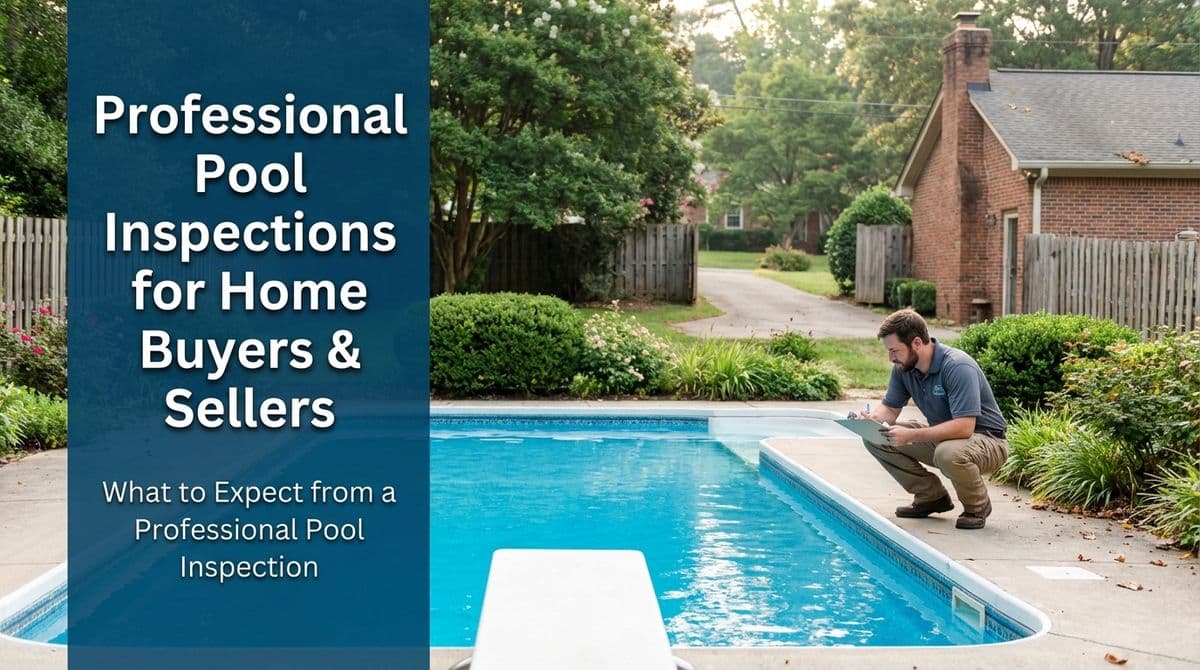
What to Expect When You Book a Professional Pool Inspection
We recently got a call from a real estate agent — let’s call her Becky — who was under contract on a home with a pool. She told us, “My buyers just want someone to look over the equipment. Do you do pool inspections, and what’s included besides just running everything?”
That’s a question we hear a lot from buyers, sellers, and agents. Pools can be a big selling point, but they can also hide some expensive surprises if no one really looks things over. So when Becky asked what we do, we explained that we don’t just flip a switch and say, “Looks good.” We perform a full equipment assessment, take detailed photos, and deliver a written report by email that everyone involved in the transaction can review.
In this post, we’ll walk you through what you can expect from a professional pool inspection when you’re buying or selling a home, how we schedule them around contract deadlines, and how to get the pool ready so the inspection goes smoothly.
Why Pool Inspections Matter in a Real Estate Deal
A home inspection will usually note that a pool exists, but most home inspectors don’t test pool systems in depth. That’s where a dedicated pool inspection comes in. When Becky called, her buyers just wanted peace of mind: “Is everything in proper working order, or are we walking into a money pit?”
A professional pool inspection helps:
- Buyers understand the condition of the pool, equipment, and safety features before closing.
- Sellers avoid last-minute surprises that can derail negotiations or force last-minute credits.
- Agents document the condition with a clear, third-party report and photos.
Instead of guessing based on how the water looks on picture day, everyone gets a documented snapshot of how the system was functioning at the time of inspection.
What We Check During a Pool Inspection
When Becky asked, “What all do you guys do besides run the equipment?” we walked her through our process. On a typical real-estate-focused pool inspection, we:
- Run and evaluate the circulation system – pump operation, priming, unusual noise or vibration.
- Inspect the filter – filter type (sand, cartridge, DE), condition, pressure readings, visible leaks, and general age/appearance.
- Check the heater (if present) – verify that it powers on, runs, and responds correctly to controls.
- Inspect valves and plumbing above ground – visible leaks, cracks, and improper configurations.
- Review automation and timers – make sure systems start, stop, and switch modes properly.
- Look over ancillary equipment – chlorinators, salt systems, in-floor cleaning systems, and booster pumps.
Our focus is on function and condition. We’re there to see whether the equipment appears to be working properly at the time of inspection and to document anything that looks worn, damaged, or in need of repair or replacement.
In most real estate inspections, we’re not performing pressure tests or leak detection unless that’s been arranged as a separate service. We always encourage buyers and sellers to ask ahead of time if they’re concerned about leaks or structural issues so we can discuss what’s appropriate for that particular pool.
Photos, Written Reports, and How They’re Used
During Becky’s call, we explained that our technician “takes detailed photos of essentially everything” and then sends an emailed report with photos and descriptors. That’s a key part of the value for real estate clients.
Here’s what that typically includes:
- Overview section – a summary of the overall condition and any major concerns.
- Equipment list – make/model and visible age/condition of pumps, filters, heaters, and control systems.
- Findings and notes – items working as expected, items not functioning, and components near the end of their useful life.
- Photo documentation – wide shots of the pad and close-ups of issues like leaks, rust, cracks, or missing parts.
Because everything is documented in writing and photos, the report can be shared easily with buyers, sellers, and agents. It can also be passed along to another pool company if anyone wants quotes for repairs or upgrades before or after closing.
Scheduling, Timelines, and Contract Deadlines
Becky’s next question was about timing: “How far out do you guys book? Could this be done next week?” That’s an important concern during an inspection period.
Here’s how we generally handle scheduling around real estate timelines:
- Book as early as possible – our schedule can fill quickly, especially during peak season. The sooner you contact us, the more options we have.
- Tell us your deadline – as we told Becky, letting us know the inspection or repair-request deadline up front helps us see where we might be able to “squeeze in” an appointment.
- Allow time for the report – we typically send the emailed report and photos after the on-site visit, so factor in a bit of time to review before the end of your inspection period.
Pool inspections for real estate are usually quicker to schedule than major repairs, but they still depend on overall workload and season. If you already know you’re writing an offer on a home with a pool, it’s smart to line up the inspection company as soon as the contract is accepted.
How to Prepare Your Pool for an Inspection
A little preparation on the seller’s side can make a big difference in how smoothly the inspection goes and how complete the report is. We recommend:
- Make sure the power is on – we need power to run pumps, heaters, and automation. If the home is vacant, confirm utilities are active.
- Ensure water level is correct – if the water is too low, equipment can’t be safely run.
- Clear access to the equipment pad – trim plants, move trash cans or storage bins, and unlock any gates.
- Have remotes and controls available – if there’s a remote, wall panel, or phone app the seller uses, make sure instructions or access are available.
- Provide any known history – recent repairs, replaced equipment, or known issues help us give better context in our notes.
Buyers and agents can help by confirming these items with the seller ahead of time. When we arrive to find the equipment accessible, powered, and ready to run, we’re able to provide a much more complete picture in the report.
Costs and Who Sets Up the Account
On the call, Becky also asked about logistics and payment. For a real estate pool inspection in our area, we quoted $250. Prices can vary by market and scope, but one thing tends to be the same: we need an account under the person who will be paying.
That usually means:
- The buyer or seller is our actual customer in the system, even if the agent coordinates scheduling.
- The agent can absolutely call to schedule, but we’ll still need the paying party’s information before the visit.
Setting that up early avoids delays and helps ensure the report and photos go to the right person (or people) as soon as they’re ready.
Making the Pool Part of a Smooth Closing
When Becky hung up, she said she’d talk to her clients and give them our number so they could move forward if they wanted. That’s exactly how we like to see pool inspections fit into a transaction: as a clear, documented step that helps everyone feel confident about the property they’re buying or selling.
If you’re an agent, buyer, or seller looking at a home with a pool, consider a professional pool inspection as part of your due diligence. With a thorough assessment, detailed photos, and a written report delivered on time, the pool becomes one less unknown and one more asset you understand going into closing.