Why Your Pool Pump Won’t Prime After Cleaning the Basket
Pump won’t prime after you cleaned the basket? A missing or bad lid o-ring may be the culprit. Learn how to spot air leaks and protect your pool pump.
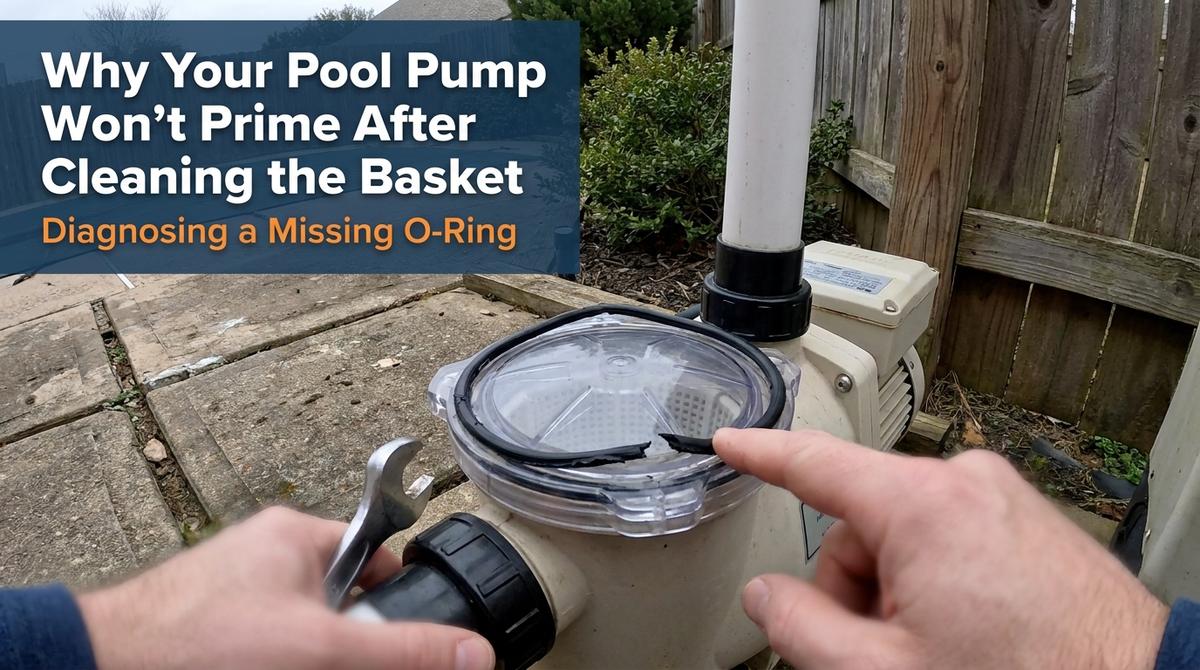
When Your Pool Pump Won’t Prime After Cleaning the Basket
We recently got a call from a customer — let’s call him Tom — who sounded pretty frustrated. He’d done what most pool owners try to do: take good care of the equipment. He opened up the pump basket by the motor, cleaned out a bunch of debris, put everything back together, tightened the lid… and then the pump refused to prime.
Instead of a solid stream of water, the pump basket would only fill about a third to halfway when he ran the hose into it. As soon as he took the hose away, the water level would drop again, the motor got loud, and nothing was pushing water to the pool or popping up his cleaning heads. He was worried about burning out the motor — and he was right to be.
What Priming Your Pool Pump Actually Means
Before we dug into Tom’s problem, we walked him through what should normally happen. When a pump is primed, the housing and suction line are full of water, not air. That solid column of water lets the impeller pull water from the pool and push it through the filter, heater, and back to the returns.
If there’s air getting into the system, the pump can’t grab a solid column of water. You’ll see some water in the pump basket, but it will be turbulent, with bubbles or big air pockets, and the level may never come up all the way. The pump may get noisy because it’s partially running dry — and that’s where damage can happen.
Tom’s Clue: The Pump Lid Looked “Just Like Glass”
As we asked Tom a few questions, one detail jumped out. We asked if he had lubed his lid o-ring recently or noticed if it looked cracked or flat.
His answer: “There’s really no ring in there, no gasket. It’s like the glass, and there’s nothing in there.”
That’s the smoking gun. Every standard in-ground pool pump lid should have an o-ring or gasket under it. On many Hayward pumps (like Super II or TriStar models), it’s a large round rubber o-ring that sits in a groove around the opening of the pump housing or on the underside of the lid.
Why a Missing Lid O-Ring Stops Your Pump from Priming
The lid o-ring’s only job is to create an airtight, watertight seal between the pump housing and the lid. When that seal is missing, flattened, cracked, or dry, air is sucked into the pump every time it tries to pull water from the pool.
That’s exactly what was happening to Tom. He could tighten the lid all he wanted, but without the o-ring, there was still a gap. The pump drew in air at that gap instead of solid water from the pool. Result: noisy motor, low water level in the basket, and no prime.
Without that seal, you can:
- Lose prime every time you open the basket
- Hear the pump get noticeably louder
- See air bubbles or a low water level under the lid
- Risk overheating the motor and pump seal
How We Walk Homeowners Through a Quick Check
With Tom, we kept it simple and practical. Here’s the same process we recommend if your pump won’t prime right after cleaning the basket:
- Shut the system off immediately. If the pump is loud and the basket isn’t filling completely after a minute or two, turn it off. Constantly running it dry can damage the shaft seal and motor.
- Open the pump lid and look for the o-ring. There should be a black or dark rubber ring either in a groove on the pump housing or embedded into the lid. If it’s completely missing, you’ve found a big part of the problem.
- Inspect the o-ring’s condition. If it’s there but cracked, flat, brittle, or stretched, it won’t seal properly and should be replaced.
- Re-seat and lube the o-ring. Clean the groove, remove any sand or debris, then apply a thin coat of pool-safe silicone lubricant — never petroleum jelly — before putting it back in place.
- Manually prime the pump. With the lid off, fill the pump basket housing with water from a garden hose, put the basket back, then reinstall the lid with the o-ring properly seated.
- Restart and watch. Turn the pump on, and within a minute or so you should see the basket fill fully with water with minimal air bubbles.
Other Places Air Can Sneak In (If the Lid Looks Good)
Sometimes the lid o-ring is fine, but you still have an air leak. When we’re on a service call, we check a few other common trouble spots:
- Drain plugs on the pump housing: Most pumps have one or two plugs near the bottom for winterizing. If the o-rings on those plugs are missing or the plugs are just finger-tight, they can suck in air.
- Unions and fittings before the pump: Any threaded fitting or union on the suction side (from the pool to the pump) can leak air if it’s loose, cracked, or missing its gasket.
- Cracks in the suction line: Less common, but a cracked PVC line underground or above ground before the pump can pull air in, especially when the pump is running.
- Low water level in the pool: If the skimmer is pulling in air because the water level is below halfway up the skimmer opening, the pump will struggle to maintain prime.
If you’ve checked or replaced your lid o-ring and still can’t keep a prime, it may be time to have a pro pressure-test and inspect the suction side for leaks.
What to Bring When You Need a New Pump Lid O-Ring
Back to Tom’s call — once we confirmed there was no o-ring under that clear lid, we suggested he stop running the pump and come by the shop. Here’s what we told him to bring, and it’s the same advice we give anyone in his situation:
- The pump lid itself. That makes it much easier to match the correct o-ring size and profile.
- A clear photo of the pump label. On Hayward pumps, for example, we look for model names like Super II, TriStar, MaxFlo, etc., and any model numbers.
- Any notes on what it’s doing. For example, “basket only fills halfway,” “pump louder than usual,” or “loses prime after I clean the basket.”
With that information, we can quickly match the right gasket, show you how it sits in the groove, and recommend the proper lubricant to keep it sealing well.
When to Shut It Down and Call for Help
There’s a fine line between a do-it-yourself fix and risking expensive damage. We always suggest shutting the pump off and reaching out if:
- The pump has been running loudly and not fully priming for more than a few minutes
- You can’t see any o-ring issues, but you still can’t get a full basket of water
- You see water leaking around the pump housing or motor shaft
- The system keeps losing prime shortly after you get it started
Sometimes it really is “just an o-ring,” like in Tom’s case. Other times there’s a larger air leak or a failing pump seal. Catching it early can mean the difference between a quick, inexpensive gasket replacement and a full pump replacement.
Keeping Your Pump Happy After Every Basket Cleaning
Tom thought he’d broken something just by doing the right thing and cleaning the basket. The good news is that routine maintenance is exactly what your pool system needs — it just has to be paired with a good seal.
After every basket cleaning, make it a habit to:
- Visually inspect the lid o-ring and wipe away any debris
- Re-seat the o-ring properly and make sure it isn’t twisted
- Tighten the lid firmly but without over-tightening
- Watch the pump for the first minute to confirm it primes fully
If your pump won’t prime after you’ve cleaned the basket — or you suddenly notice that your “glass lid” doesn’t seem to have any gasket at all — chances are you’re dealing with the same issue Tom was. Get that o-ring replaced, and your system will usually spring back to life.