Pool Pump Running But Not Moving Water? Here’s What to Check
Pool pump running but not moving water? Learn the most common causes, what to check safely yourself, and when it’s time to call for professional pool pump service.
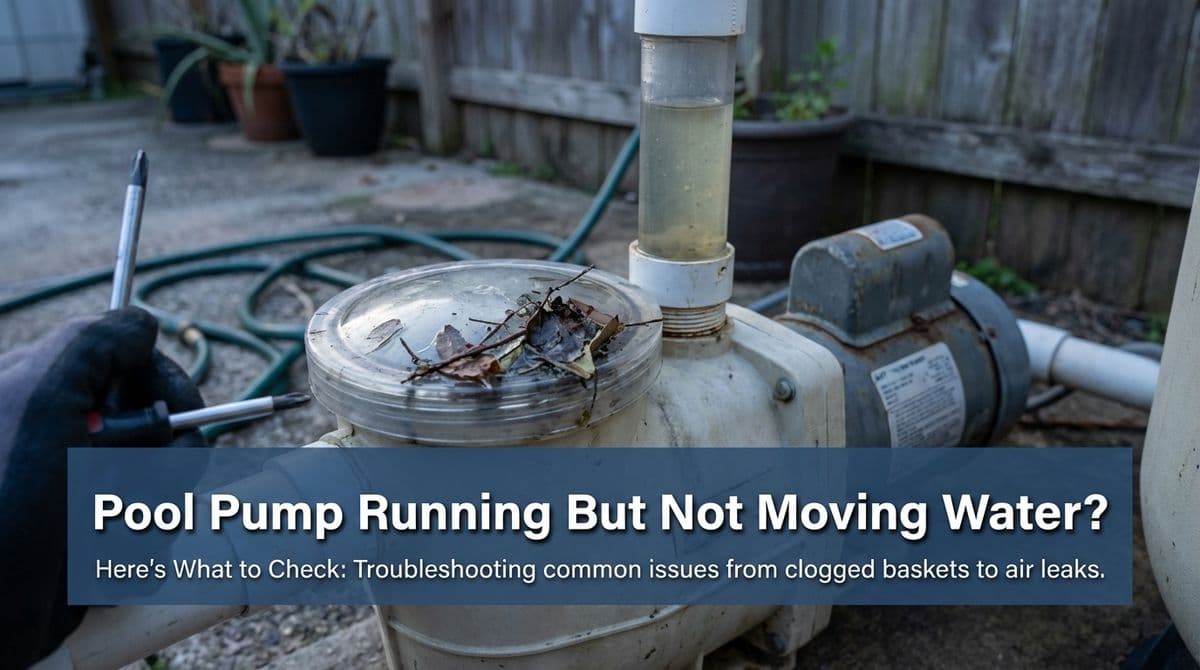
When Your Pool Pump Runs But Water Doesn’t Move
We recently got a call from a customer — let’s call him Brian — who was pretty puzzled. His pool pump controller was lit up, the display showed the speed and percentage like normal, but the pump itself wasn’t moving any water. On top of that, it wasn’t making any noise at all.
That detail — lights on, programs showing, but no sound and no water movement — is something we hear a lot. Before we even schedule a repair, we like to walk homeowners through a few simple checks that can sometimes save a service call.
In this post, I’ll share the same questions and steps we use on the phone when someone like Brian calls in. If your pool pump seems to be “on” but your water’s not circulating, here are the most common causes and what you can safely check yourself.
First: Is the Pump Actually Running or Just Powered?
The first thing we always clarify on a call is the difference between a pump that’s powered and a pump that’s actually running. Brian told us the programs were displaying and it showed the percentage, but there was no noise and no movement in the pool.
If you’re seeing lights and settings, your pump is getting power. But if you don’t hear the motor hum, there’s a problem somewhere between the control system and the motor itself.
Here’s what you can check:
- Listen closely at the pump: Even variable-speed pumps should make a faint hum when running. Total silence usually means it’s not starting.
- Look at the water surface at the returns: If the pump is running, you should see movement or feel flow coming from the return jets.
- Check the pump basket: With the system off, open the clear lid. When you turn it back on, you should see water swirling and filling the basket if it’s actually running and primed.
Common Reasons a “Running” Pump Isn’t Moving Water
Once we confirm whether the motor is truly running, we start narrowing down the cause. Below are the most common issues we see when a pool pump seems to be on but isn’t circulating water.
1. The Pump Lost Prime
If you hear the motor but there’s no water movement, the pump may have lost prime — in other words, it’s full of air instead of water.
What you can check:
- Turn off power at the breaker or timer.
- Remove the pump lid and look inside. Is the basket area mostly air instead of water?
- Clear any debris from the basket.
- Fill the pump basket housing completely with a garden hose, then replace the lid snugly.
- Turn the system back on and watch to see if the pump pulls a solid column of water.
If it still won’t prime after a minute or two, there could be an air leak or suction-side obstruction that needs professional attention.
2. Blocked Skimmer or Pump Basket
Heavy leaf loads or debris can choke off water flow enough that it looks like the pump isn’t working.
Homeowner checklist:
- Turn off the system.
- Empty all skimmer baskets and the pump basket.
- Check around the main drain covers (visually) for large debris if your water is clear enough.
- Turn the system back on and see if flow improves.
3. Valves in the Wrong Position
We often find that a valve was accidentally turned while someone was cleaning or working around the equipment. If the suction or return valves are closed or partially closed, you may not get any visible circulation.
What to look for:
- Check all visible valves near the pump (suction and return lines).
- Make sure they’re fully open to the pool, not set to “spa only” or “closed.”
- If you’re unsure which way is open, take a clear photo and send it to a pro before forcing anything.
When the Pump Is Silent but the Controller Is On
In Brian’s case, he told us, just like in the call transcript this topic came from, that the controller showed the run percentage but the pump made no sound at all. That usually points to one of a few issues:
- Failed motor or motor bearings (especially on older single-speed pumps)
- Failed drive or electronics on a variable-speed pump
- Bad capacitor — the motor wants to start but can’t
- Internal overload tripped from previously overheating
These are not DIY-friendly repairs. If your pump is completely silent while the control panel looks normal, it’s time to schedule a service visit. We’ll typically verify voltage at the motor, check the drive or capacitor, and inspect for signs of overheating or water damage.
Before You Call for Service: Safe DIY Checks
Here’s a quick summary of what we encourage homeowners to do before we come out:
- Check your breaker and timer: Make sure the pump breaker is on and the timer or automation system is actually calling for the pump to run.
- Empty baskets: Clear skimmer and pump baskets of all debris.
- Inspect valves: Verify that suction and return valves are open to the pool.
- Re-prime the pump: Fill the pump housing with water and restart.
- Look and listen: Is the motor humming, buzzing, or totally silent? Is there any water movement at the returns?
If you’ve gone through those steps and your pump is still not moving water — especially if your controller says it’s running but the pump is quiet — that’s the point where it’s safer and cheaper in the long run to have a professional take a look.
When to Stop Troubleshooting and Call a Pro
Any time you’re tempted to open up the motor, disconnect electrical wires, or bypass safety devices, that’s your sign to stop. Pool pumps combine water and high voltage — not a good mix for guesswork.
When Brian finished describing his situation, we set up a service visit so we could properly diagnose whether it was a failed motor, drive, or another component. In many cases, catching the issue early can mean the difference between a simple part replacement and a full pump change-out.
If your pump is “on” but your pool water isn’t moving, walk through the basic checks above. And if something doesn’t look right or you’re just not comfortable with it, reach out. We’re always happy to help you figure out whether it’s a quick fix you can do yourself or something that really does need a technician on site.