Pool Pump Suddenly Stopped? Here’s What to Do
Pool pump suddenly dead? Learn what you can safely check, how to protect your water while circulation is down, and when it’s time to call a pool pro.
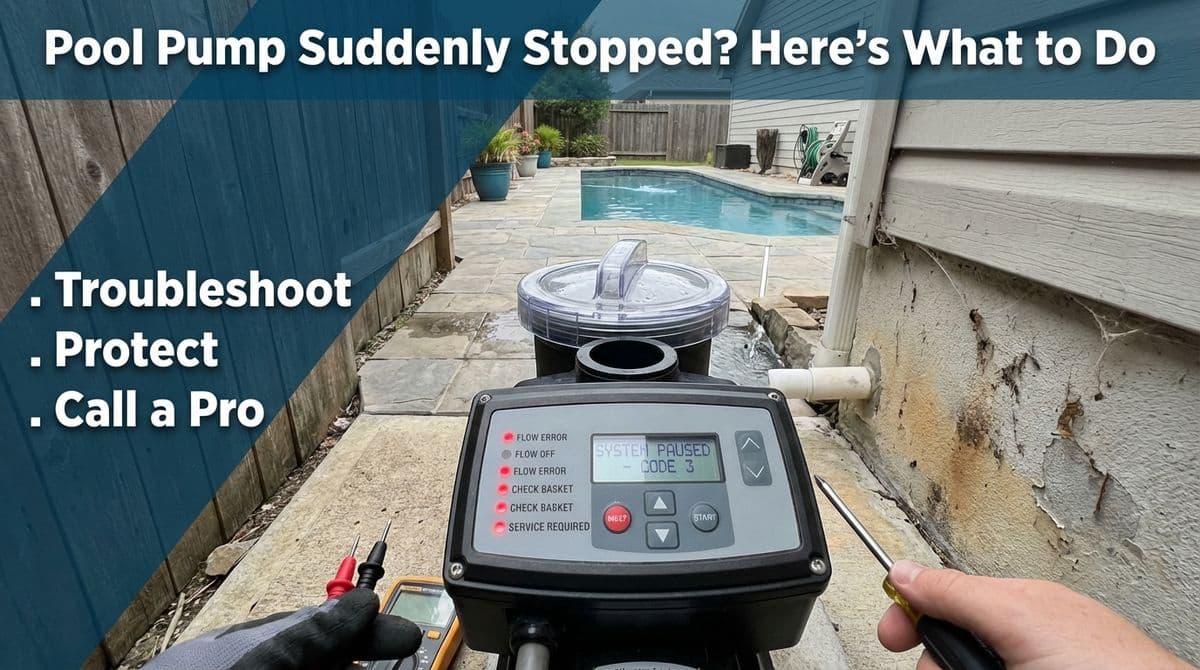
When a Pool Pump Suddenly Goes Silent
We recently got a call from a customer — let’s call him Mark — whose pool pump in a small backyard pool had suddenly gone completely silent. No hum, no click, no error code on the screen. His booster pump screen still lit up, but the main Pentair pump display was totally black.
Mark told us the pump had tripped the breaker a few times in the past, but this time it wouldn’t turn on at all. While we scheduled a service visit, he also asked a big question every pool owner worries about: “It’s a salt pool — what do I do about the water until you can get here? Do I just throw in some chlorine tablets?”
If you ever find yourself in Mark’s shoes, here’s the step-by-step way we walk our customers through pump troubleshooting, short-term water care, and how to know when it’s time to call a pro.
First Check: Power, Breakers, and Simple Stuff
When a pump won’t even make a sound, we always start with the basics you can safely check yourself:
- Check the breaker panel – Look for a tripped breaker. If you see one, firmly switch it all the way off, then back on. If it trips again immediately, don’t keep resetting it; that’s a sign of an electrical or equipment issue.
- Look for power to other equipment – In Mark’s case, the booster pump screen still lit up, which told us some power was present at the pad. If all equipment is completely dead, you may have a larger power supply or breaker issue.
- Inspect the pump timer or automation – Make sure your timer or automation system hasn’t been turned off or put in “service” or “timeout” mode.
If all of that looks normal and your pump is still totally unresponsive, it’s usually not just a settings issue — there’s likely something going on inside the pump or motor.
Why a Pump Might Be Dead Silent
Based on what Mark described — no sound, no display, history of occasional tripping — we suspected something like a failed capacitor or another internal electrical problem. A few common culprits when a pump suddenly stops:
- Bad start capacitor – The motor’s “kickstarter.” When it fails, the pump may hum and not start, or it can blow and take out other components, leaving things dead.
- Loose or burned wiring – Heat, vibration, and age can loosen or damage connections inside the motor or at the terminal block.
- Water intrusion – A leak above the pump can let water into the motor or electronics and short things out.
- End-of-life motor – Bearings, windings, and electronics eventually fail, especially in older single-speed pumps.
Those are the kinds of issues we don’t recommend homeowners tear into themselves. The parts are inexpensive compared to the risk of shock, fire, or voiding equipment warranties. That’s where it makes sense to get us (or another licensed pro) involved.
How to Protect Your Water While the Pump Is Down
Mark’s other big concern was his saltwater pool. With the pump off, his salt system couldn’t produce chlorine. His pool “looked pretty clean,” but he wanted to know what to do until we could get there the following week.
Here’s the advice we gave him — and what we tell any customer when the pump is down for a few days:
- Add a chlorine tablet floater – For a small pool, a simple floater with a couple of tabs will slowly feed chlorine into the water.
- Boost with shock or liquid chlorine – To be safe, especially in warm weather, add either a bag of shock or about a gallon of liquid chlorine. This gives the pool a strong chlorine “bank” to hold you over.
- Test and adjust if you can – If you have a test kit or strips, aim to keep free chlorine in the 3–5 ppm range while circulation is down.
Remember: a salt system doesn’t magically keep the pool clean on its own — it just makes chlorine. When it’s not running, treating your salt pool like a traditional chlorine pool is the right move.
Manual Circulation: Why Brushing Matters So Much
One of the simplest but most overlooked tricks we shared with Mark was manual circulation. Standing water is what algae loves. If your pump is off, you can still get the water moving:
- Brush the entire pool – Spend about 10 minutes brushing walls, steps, and floor. Push water around as you go. You’re not just cleaning; you’re circulating.
- Focus on dead spots – Benches, corners, and steps are where algae starts first. Give them extra attention.
- Do this daily until the pump is fixed – It’s a small effort that makes a big difference in preventing cloudy water and algae blooms.
That combination — chlorine tablets, a one-time shock or liquid dose, plus daily brushing — is usually enough to keep a small pool like Mark’s in good shape for several days without circulation.
When It’s Time to Call a Professional
There’s a point where DIY troubleshooting should stop and a professional should step in. You should schedule service if:
- The pump is completely dead (no sound, no lights) and breakers/timers look normal.
- The breaker trips repeatedly when you try to run the pump.
- You see burned, melted, or corroded wiring at the pump.
- The pump is under manufacturer warranty and you’re not sure what’s covered.
In Mark’s case, his pool was built around 2020, so we talked about manufacturer motor warranties typically being around two years. Older equipment often isn’t covered anymore, but it’s still worth checking — especially if your pump is relatively new or was installed by a builder.
When we come out, we’ll test power, open the motor (as needed), confirm whether it’s something simple like a capacitor or a loose connection, and let you know if repair or replacement makes the most sense for your situation.
Keep Calm, Protect the Water, and Get It Checked
A silent pool pump can be nerve-wracking, especially when you’re staring at a backyard full of still water in the heat. But as we walked through with Mark, you don’t have to panic:
- Check breakers and obvious settings.
- Add chlorine (tabs plus shock or liquid).
- Brush daily to manually move the water.
- Call a pro if the pump stays dead or keeps tripping.
If your pump has suddenly stopped working and you’re not sure what’s going on, we’re happy to take a look, get the equipment diagnosed, and help you keep that water clear and safe until everything’s running smoothly again.