Pool Pump Won’t Self-Prime? Causes, Checks & Fixes
Pump won’t self-prime and the basket won’t fill? Learn the most common causes, what you can safely check yourself, and when it’s time to call a pool pro.
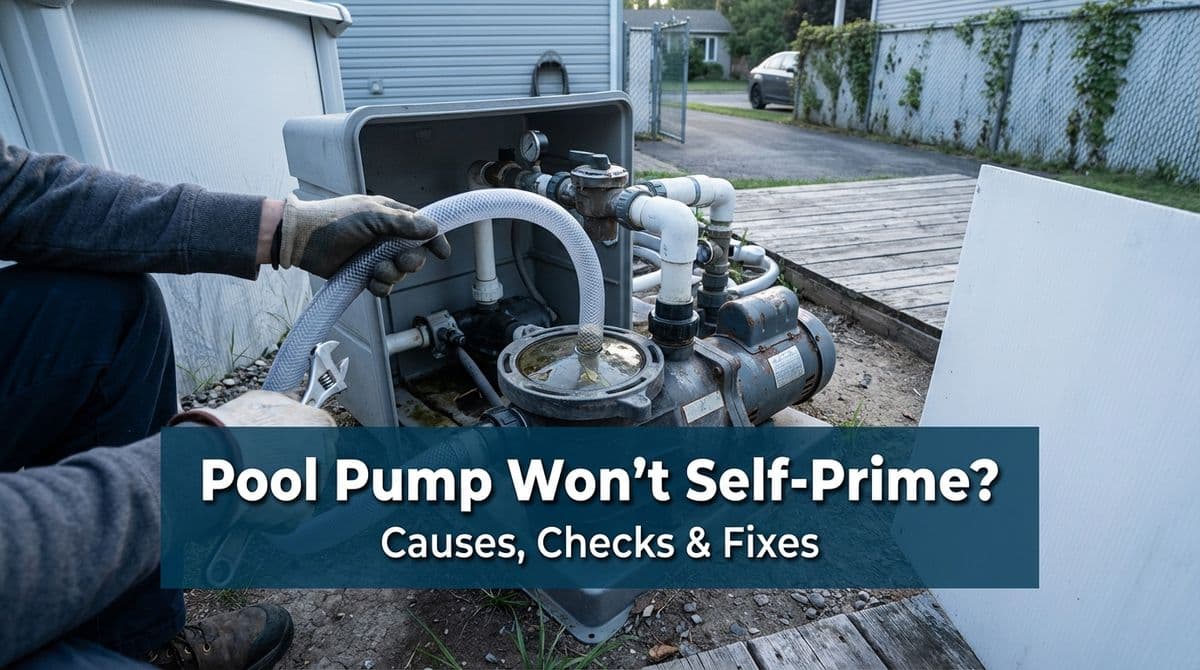
When Your Pool Pump Won’t Self-Prime
We recently got a call from a customer who was frustrated with a pool pump that just wouldn’t cooperate. Every time he turned it on, the pump wouldn’t pull any water on its own. It had been getting worse over the last couple of months, and by the time he called us, he had to pour water into the pump pot to get it going at all.
He told us, “If I prime it by pouring water down, it’ll start to suck, but the pump basket never really fills up.” He was even wondering if he needed a plumber’s snake because he suspected something might be blocking the line.
We see this problem a lot, especially as pumps age or as debris buildup sneaks up on the system. So, using this as an example, let’s walk through why a pool pump won’t self-prime, what you can safely check yourself, and when it’s time to bring in a professional.
What Does It Mean When a Pump Won’t Self-Prime?
Your pool pump is designed to self-prime, which means it should be able to pull water from the pool and fill the pump basket on its own once it starts up. When that doesn’t happen, you’ll usually see:
Little or no water in the pump basket
Lots of air swirling in the lid, never fully filling with water
Weak or no flow coming back into the pool
In Tom’s case, he could get some flow by manually adding water, but it never fully filled the pot. That’s a classic sign that either air is getting into the system, there’s a blockage, or the pump just isn’t able to pull a solid column of water anymore.
Common Causes of a Pool Pump That Won’t Prime
From what Tom described on the phone — no leaks he could see, new o-rings on the lids, and declining performance over months — a few likely culprits jumped to mind:
Air leaks on the suction side (before the pump): bad lid o-rings, loose unions, cracked fittings, or a low water level.
Clogged or partially blocked lines: debris stuck in the skimmer line or main drain line.
Dirty or blocked pump basket: leaves, seeds, or small stones limiting flow.
Impeller clog: hair, string, or fine debris wedged in the impeller, reducing suction.
Pump or motor wear: an older pump can lose efficiency and struggle to self-prime.
Tom specifically asked whether we would bring something like a plumber’s snake. For pool plumbing, we don’t typically use a snake — instead, our technicians use a CO₂ tank to blow out lines. CO₂ is fast, powerful, and less likely to damage flexible pool plumbing than a metal snake.
DIY Checks You Can Safely Try First
Before we schedule a service visit, we’ll often walk homeowners through a few simple checks. These can sometimes solve the problem without tools — and they also give us valuable information if we do need to come out.
1. Check Water Level and Skimmer Baskets
Make sure the pool water level is about halfway up the skimmer opening. If it’s too low, the skimmer will suck air and the pump can’t prime. Then:
Turn off the pump.
Empty skimmer baskets and remove any large debris.
Make sure the skimmer weir doors (the little flaps) move freely and aren’t stuck.
2. Inspect the Pump Basket and Lid O-Ring
He had already replaced his pump lid O-rings, which was a great start. For most homeowners, we recommend:
Turn off the pump and release pressure at the filter if needed.
Remove the pump lid and clean out the pump basket thoroughly.
Inspect the lid o-ring for cracks, flattening, or missing sections.
Apply a thin layer of pool-safe silicone lubricant to the o-ring.
Re-seat the lid carefully and tighten it snugly (but don’t overtighten).
If that o-ring isn’t sealing, air can sneak in, and the pump won’t be able to pull a vacuum and self-prime.
3. Manually Prime the Pump Correctly
What this customer was doing — pouring water into the pump — is actually part of the right process. Here’s the full method we recommend:
Turn off power to the pump at the timer or breaker.
Remove the pump lid and fill the pump basket housing with water from a hose or bucket.
Replace the lid, making sure the o-ring is seated properly.
Open any air relief valve on the filter.
Turn the pump back on and give it a minute or two to catch prime.
If the basket never fills all the way and you still see mostly air under the lid, there may be a deeper issue.
When It’s Time to Call a Pool Pro
In this situation, the problem had been getting worse for months, and basic checks weren’t solving it. That’s when it makes sense to schedule a service visit. Here are some clear signs to call in a technician:
The pump runs but never fully fills with water, even after proper priming.
You suspect a blocked line (for example, a toy, large debris, or heavy leaf build-up).
You hear unusual noises from the pump (grinding, squealing, or loud humming).
You don’t see any obvious leaks or issues, but performance keeps declining.
On calls like this, our technician will typically:
Inspect all suction-side plumbing and fittings for air leaks.
Check the pump internals, including the impeller and seals.
Test the suction lines and, if needed, use a CO₂ tank to blow out any clogs.
Evaluate whether the pump itself is properly sized and in good condition.
Preventing Future Priming Problems
Once we get a system like Tom’s running properly again, we always talk about how to prevent a repeat. A few simple habits go a long way:
Keep skimmer and pump baskets cleaned out at least once a week.
Maintain proper water level, especially during hot, dry, or windy weather.
Have o-rings (pump lid, filter, unions) inspected and lubricated regularly.
Schedule routine equipment checks, especially before and after peak swimming season.
If your pool pump won’t self-prime, you’re not alone — we handle calls like this all the time. Try the safe DIY steps above, and if your pump still refuses to cooperate, we’re happy to come out, diagnose the issue, and get your system pulling strong, steady water again.