What Weekly Pool Service Includes & Chemical Costs
Wondering what weekly pool service really includes and how much chemicals cost each month? Here’s a clear homeowner’s guide to real-world pool service pricing.
What Weekly Pool Service Really Includes
We recently got a call from a homeowner — let’s call her Julie — who was getting ready to buy a home in Litchfield Park for her elderly parents. The house had a backyard pool, and her first question to us was simple: “What do you actually do each week, and what is this really going to cost them each month?”
That’s a smart question, especially when you’re trying to budget for parents who can’t safely handle chemicals or heavy equipment. We walked Julie through our typical weekly service and broke down the monthly chemical costs in plain numbers. I’ll do the same here so you have a clear picture before you sign a service contract or buy that home with a pool.
Typical Weekly Pool Service: What We Do Each Visit
For a standard residential pool, our weekly service is a flat monthly fee. In Julie’s case, that started at $127.50 per month for a smaller, average-size pool. That includes one visit per week, every week.
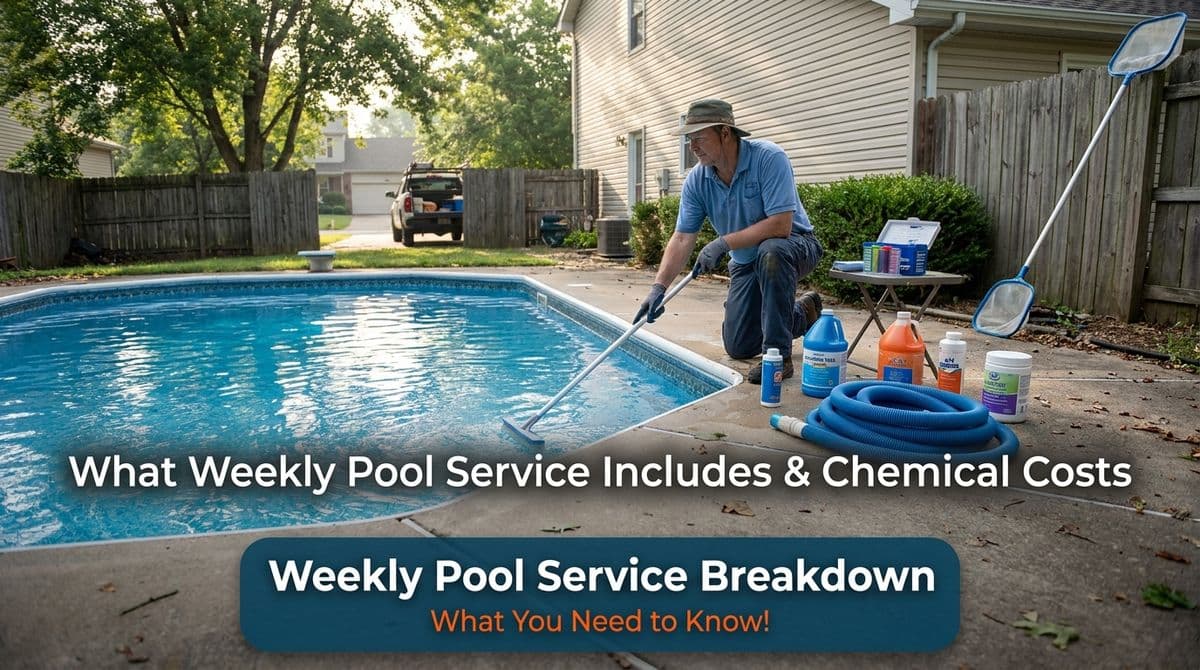
On a typical visit, here’s what we handle:
- Water testing: We check chlorine, pH, alkalinity, and other key levels.
- Adding chemicals as needed: Chlorine, acid, and tablets as required by the readings.
- Skimming the surface: Leaves, bugs, and floating debris are removed.
- Brushing: Walls, steps, and tile line are brushed to prevent algae buildup.
- Vacuuming (as needed): Debris from the pool floor is removed.
- Emptying baskets: Skimmer and pump baskets are emptied to keep flow strong.
- Equipment check: We visually inspect the pump, filter, and other equipment.
All of that falls under the flat monthly service fee. What varies month to month is the chemical cost, which depends on several factors.
How Much Do Pool Chemicals Cost Each Month?
Julie asked us exactly what most homeowners want to know: “If my parents’ pool is used about once a week, and it doesn’t get a lot of debris, what will chemicals cost?”
For a smaller, average-size chlorine pool that’s reasonably clean and lightly used, we walked her through a ballpark estimate using our current pricing:
- Liquid chlorine: About $8.00 per gallon.
- Muriatic acid: About $9.25 per gallon.
- Chlorine tablets: Cheaper when purchased in bulk; usage varies.
For a typical chlorine pool like Julie described, we might use:
- Winter: About 1–2 gallons of chlorine for the month and 1 gallon of acid.
- Summer: Up to 5 gallons of chlorine in the hottest months and 1–2 gallons of acid, assuming it’s kept relatively clean and the equipment is working properly.
In quieter months, some customers see chemical charges around $20–$30 per month. In peak summer or after heavy storms, that number can climb because we may need more chlorine and acid to keep everything balanced and clear.
What Affects Your Monthly Chemical Costs?
The numbers above are averages, but your actual bill will depend on a few key things:
1. Pool Size and Depth
A small “kidney” play pool will naturally use less chemical than a large, deep diving pool. More water means more chlorine and acid to maintain safe levels. When you call us, we’ll always ask about pool size so we can give you a realistic estimate.
2. How Often the Pool Is Used
In Julie’s case, her parents would be using the pool about once a week. That’s fairly light use. Heavier use — kids in and out all day, frequent pool parties, sunscreen and body oils — all increase chlorine demand. The more swimmers, the more we typically have to dose.
3. Debris, Dust, and Landscaping
Julie planned to remove many flowering plants to cut down on debris, which helps. Leaves, flowers, and dust all break down in the water, forcing chlorine to work harder. Yards with lots of trees, flowering shrubs, or exposed dirt usually see higher chemical use, especially after wind storms.
4. Season and Weather
In the cooler months, water temperatures drop, sunlight is less intense, and chlorine lasts longer. In the peak of summer, high heat and strong sun burn off chlorine quickly. Add in a few dusty monsoon storms, and your pool will need more chlorine and acid to stay clear and safe.
5. Salt System vs. Traditional Chlorine
Many homeowners are surprised to learn that a salt pool is still a chlorine pool. A salt system uses a generator to convert salt into chlorine in the water, so you usually buy less liquid chlorine and fewer tablets.
However, salt pools tend to run a higher pH, so you typically use more acid than with a basic chlorine pool. With a well-functioning salt system you may save on chlorine tablets and jugs, but you’ll still need regular acid additions and occasional salt refills.
How Pool Type and Surface Can Change Pricing
Beyond size and usage, the type of pool and surface can influence both service routines and long-term costs:
- Play pools vs. deep pools: Play pools are shallower and often smaller, so they generally cost less in chemicals than a large deep-end pool.
- Pebble vs. plaster: Pebble surfaces are durable and often a bit more forgiving of minor chemistry swings. Plaster can be more sensitive and may require tighter pH and alkalinity control to avoid etching or staining.
- Pools with attached spas: Spas add water volume and additional plumbing. They’re also often kept warmer, which can increase chlorine demand slightly.
These details don’t usually change your base service fee dramatically, but they do affect how much chemical and attention the water needs over time.
Common “Surprise” Costs in the First Year
When Julie called, we focused on the weekly service and chemical costs, but it’s also helpful to know about occasional extras that can show up in the first year of ownership:
- Filter cleanings: Cartridge and DE filters need periodic deep cleaning or maintenance outside of the normal service visit.
- Startup balancing: If the pool water is out of balance when we take over, the first month may require extra chemicals to bring levels into line.
- Storm cleanup: After severe dust or monsoon storms, extra vacuuming, filter cleanings, and shock treatments may be needed.
- Equipment repairs: Older pumps, filters, and salt cells sometimes need repair or replacement within the first year of new ownership.
We always discuss these items with you before doing any additional charge work, but it’s good to keep a small cushion in your pool budget for these occasional needs.
How Billing Usually Works
Julie wanted to be sure her parents wouldn’t be hit with confusing or unpredictable bills. Here’s how we explained our process, which is typical for many weekly services:
- Flat monthly service fee: For her, that was $127.50 per month, covering weekly visits.
- Chemicals billed separately: We track actual usage (gallons, tablets, etc.) each visit.
- Monthly invoice in arrears: On the first of the month, we send an invoice for the previous month’s service and chemicals.
This way, you’re paying for what was actually used, with clear line items for both service and chemicals.
FAQ: Contracts, Cancellations, and Missed Visits
Do I have to sign a long-term contract?
Many homeowners are on month-to-month service. Longer agreements may be available, but we’re happy to explain your options so you’re comfortable with the commitment.
What if I need to cancel?
In most cases, you can cancel with written notice before the next billing cycle. We simply settle up for any service and chemicals already provided.
What happens if a visit is missed because of weather or a holiday?
If we must adjust a schedule due to severe weather or holidays, we either reschedule that week’s visit or adjust the route so your pool is not neglected. We communicate those changes so you know what to expect.
Putting It All Together for Your Budget
When we finished walking Julie through everything, she had a much clearer picture for her parents’ pool: a predictable monthly service fee, plus chemicals that typically range from about $20–$30 in quieter months, with higher usage during peak summer or after storms.
If you’re buying a home with a pool, or turning over maintenance to a professional for the first time, start by asking the same questions Julie did: What’s included weekly? How are chemicals billed? And what factors could raise or lower my monthly costs?
Once you have straight answers to those, you’ll know exactly what it takes to keep that backyard pool safe, clear, and ready to enjoy — without you (or your parents) having to lift a single chemical jug.