Can You Replace a Pool Light in Winter?
Yes, you can often replace a pool light in winter—if you plan ahead. Learn how cold water, heated pools, and LED fixtures affect safe, successful repairs.
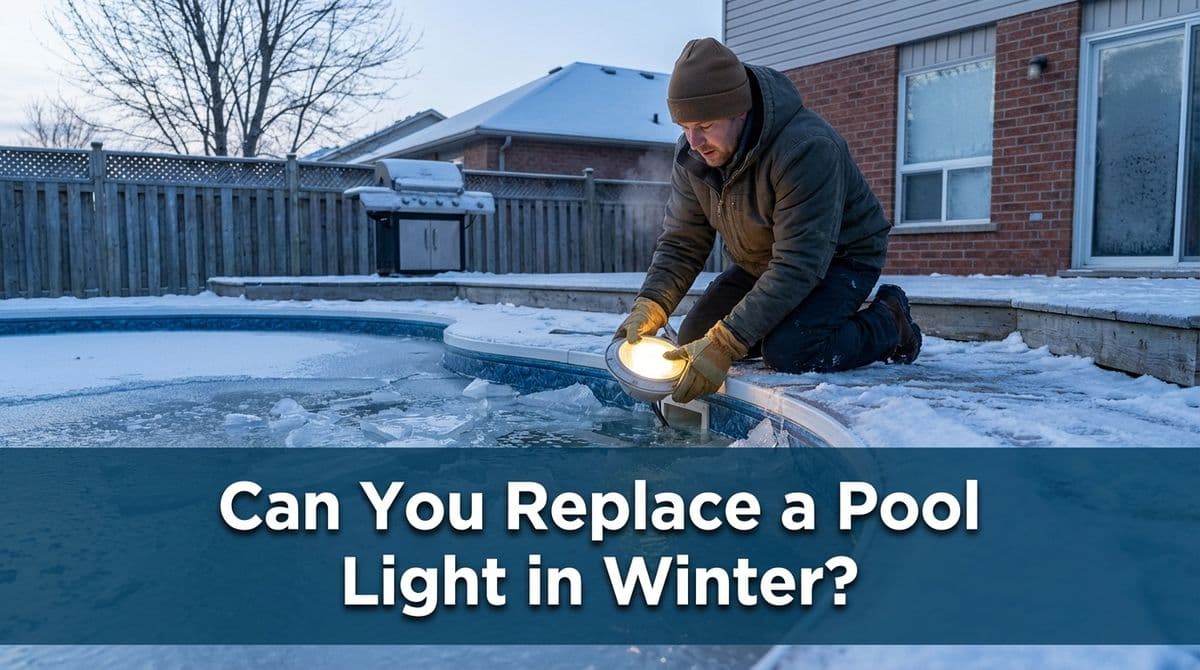
Can You Replace a Pool Light in Winter?
We recently got a call from a homeowner — let’s call her Karen — who was getting ready to sell her house. Everything was lined up until the buyer’s inspection turned up one problem: the pool light.
Her big color-changing LED light had water inside the fixture and had stopped working. The buyers wanted it repaired or replaced before closing. The catch? It was the middle of winter, the pool water was cold, and she wanted to know if we could still do the job if they heated the pool.
That conversation is one we have a lot once the temperatures drop, so we thought it would be helpful to walk through what homeowners need to know about cold-weather pool light repairs.
Is It Actually Possible to Replace a Pool Light in Winter?
The short answer is: usually yes, but it depends on conditions and safety.
With Karen, the first question we asked ourselves was the same one we ask on every winter light call: can the work be done safely and comfortably for the technician? Pool light replacements are done with the technician in the water, so water temperature matters a lot.
Many pool companies set their own comfort and safety policies about winter work. Some techs simply won’t do light jobs once the water gets too cold, even if the weather is sunny. Others will allow it if the pool is heated to a reasonable temperature on the day of the repair.
How Heating the Pool Helps
In Karen’s case, she had a gas heater and immediately offered to warm the water for us. That’s a big plus. Warmer water can:
- Make it safer and more comfortable for the technician to stay in the pool long enough to do the work
- Help prevent cramps or shivering that can become safety issues
- Reduce the risk of the tech rushing the job just to get out of freezing water
Even so, we still have to look at the overall conditions: outside air temperature, wind, rain, and how long the repair is likely to take.
Why Some Technicians Avoid Winter Pool Light Jobs
When Karen called, she was surprised to hear that some of our technicians don’t usually take pool light jobs in winter, even though replacing lights is absolutely a service we offer in warmer months.
Here’s why many pool pros are cautious about winter light work:
- Cold shock risk: Going from cold air into cold water (then back out again) isn’t just uncomfortable; it can be a safety concern.
- Long time in the pool: A light swap isn’t always a quick in-and-out. If the niche, conduit, or wiring has issues, the job can take longer.
- Reduced dexterity: Cold hands make it harder to handle tools, screws, and delicate electrical components safely.
- Weather changes: Winter storms or sharp temperature drops can turn a planned job into a miserable — or unsafe — situation.
That’s why, like we did with Karen, many companies will say, “Let us check with the technicians in the field first,” before committing to a winter appointment.
What Happens When a Pool Light Has Water Inside?
Karen mentioned the buyers were concerned because there was visible water in the light fixture and it no longer came on. That’s a very common scenario, especially on lights that are 5–10 years old.
Typically, this means:
- The lens gasket has failed, allowing water to seep into the fixture.
- The internal LED board or bulb has been damaged by water intrusion.
- The light is not safe to use until it’s repaired or replaced by a qualified technician.
Even if the breaker is off, this is not a DIY situation we recommend. A pool light is an electrical device sitting underwater; it needs to be handled by someone who understands pool electrical systems and local code requirements.
Repair vs. Replace in Winter
For most modern LED pool lights, especially those that are 5–7 years old like Karen’s, replacement is usually more practical than repair. Once water has gotten inside, the electronics are often ruined, and manufacturers don’t always support rebuilding those fixtures.
The technician will typically:
- Turn off power at the breaker and verify it’s off
- Remove the light fixture from the niche and bring it up onto the deck
- Inspect wiring, conduit, and niche condition
- Install a new fixture rated for your pool and voltage
- Test operation before re-seating it into the niche
All of this can be done in winter, as long as the safety and temperature conditions are acceptable to the technician and your local pool service company.
What Homeowners Should Do If They Need Winter Pool Light Work
If you’re in a situation like Karen’s — maybe selling your home or just wanting to fix a non-working light in the off-season — here’s how to set things up for success:
- Call early: Don’t wait until the week before closing or a big event. Give your pool company time to coordinate with technicians and weather.
- Ask about winter policies: Every company is different. Some won’t do any winter light jobs; others will if certain conditions are met.
- Offer to heat the pool: If you have a gas or heat pump heater, be ready to run it a day in advance so the water is warmed up by appointment time.
- Mention any deadlines: If a buyer or inspector is waiting on the repair, let the office know so they can prioritize scheduling where possible.
What About Cost?
Karen also asked what it typically costs to remove a non-functioning light and install a new one. Exact pricing varies by area, company, and the type of light you choose, but many companies might charge something like:
- A service call or hourly labor rate for the technician’s time
- The cost of the replacement light (standard white vs. color-changing LED, brand, and features)
Because rates and parts costs change, it’s always best to treat any numbers you hear over the phone as a rough guideline, not a formal quote, until a work order is created or a technician inspects the pool.
Bottom Line: Yes, But Plan Ahead
So, can you replace a pool light in winter? In many cases, yes — especially if you can heat the pool and conditions are safe for the technician. But it’s not a guarantee, and each company (and each tech) will have their own comfort and safety limits.
If your pool light has water in it, has stopped working, or is holding up a home sale, reach out to a qualified pool service company as soon as you can. Let them know it’s a winter light issue, mention if you can heat the pool, and ask what options are available. With a little planning, you can usually get that light shining again, even when the weather is chilly.