Why Your Salt Cell Isn’t Making Chlorine Anymore
Salt cell not making chlorine? Learn how to troubleshoot Pentair-style generators, test your water and cell, and know when it’s really time to replace it.
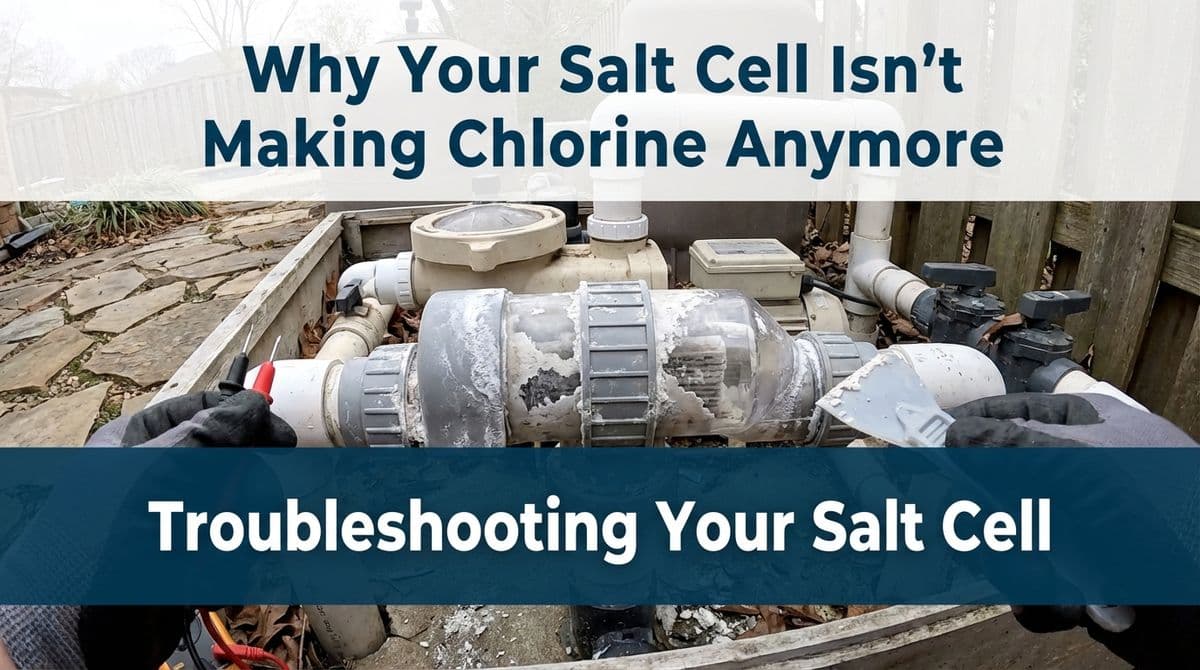
A homeowner calls about a “dead” Pentair salt cell
We recently got a call from a customer, who was sure his salt system had finally given up. He told us he had a Pentair IC40 salt cell that was “not working” and wanted to know if we had a replacement in stock.
As we talked, a few important details came out, his cell was about five to seven years old, it hadn’t produced chlorine in a couple of months, and the weather had recently turned cooler. He also wasn’t sure what his pool’s salt level was. That combination of age, cold water, and unknown salt content is exactly why we always recommend a little troubleshooting before anyone spends money on a brand-new cell.
In this post, we’ll walk you through common reasons a salt cell stops producing chlorine, simple tests you can do yourself, and when it’s time to replace the cell—especially for Pentair IC series (like IC20, IC30, IC40, IC60) and similar generators.
How long should a Pentair salt cell last?
First, it helps to know what’s “normal.” Most Pentair-style salt cells are designed with a lifespan of about 8,000–10,000 hours of actual run time. In everyday use, that usually works out to roughly 4–7 years, depending on:
How many hours per day your system runs
How high you set the output percentage
How well you balance and maintain your water
How often the cell is cleaned (and how it’s cleaned)
This customer's IC40 cell was five to seven years old, our ears perked up. That’s right in the window where cells commonly reach the end of their life. But age alone doesn’t prove it’s done, so we always look at the other big factors too.
Why salt cells stop making chlorine: the biggest culprits
Before assuming the cell is dead, we like to rule out the most common (and fixable) issues:
1. Cold water temperatures
Salt cells don’t like cold water. Most Pentair cells shut down or dramatically reduce output below about 52–55°F. When the water is too cold, the system may:
Show a “cold water” or “low temperature” warning
Stop producing chlorine even though the lights are on
Cycle on and off with no noticeable chlorine in the pool
In this case, we mentioned that the cooler weather could be a factor. However, his cell had been off for about two months, which suggested there might be more going on than just temperature.
2. High (or low) salt levels
This one surprises a lot of people: too much salt can stop a Pentair cell from producing chlorine. These systems work best around the manufacturer’s recommended range (often roughly 3,000–3,500 ppm, but always check your specific model).
If the salt is too high, the cell can shut off to protect itself. If it’s too low, it may run but not actually generate enough chlorine. That’s why we asked this customer to bring us a water sample so we could test his salt level accurately.
3. Dirty or scaled-up cell plates
Calcium scale on the metal plates inside the cell can block the system from working properly. Signs of scale include:
White, crusty buildup inside the cell
Reduced chlorine output even at higher percentages
Frequent “check cell” or “low output” warnings
A gentle, proper cleaning can often bring a scaled cell back to life—if it still has usable lifespan left.
4. End-of-life cell
Eventually, the coated plates inside the cell simply wear out. When that happens, the cell may:
Show normal lights but produce very little or no chlorine
Require very high output settings to maintain a basic chlorine level
Have a visible “wear bar” or indicator (on some models) showing low remaining life
At that point, replacement is the only real fix. We do like to rule everything out before having a customer spend that type of money on a new salt cell.
Simple tests you can do at home
Here are a few basic checks we often walk homeowners through before they visit us:
1. Check the system lights and display
Look at your salt system’s control panel. Note any:
Warning lights (cold water, low salt, high salt, check cell)
Error codes on a digital display
Output percentage settings and run times
If the panel is completely dead, you might have a power, fuse, or control board issue rather than a cell problem.
2. Test and balance your water
Use a reliable test kit or test strips to check:
Free chlorine
pH
Alkalinity
Stabilizer (CYA)
Salt level (special salt test strips or meter)
If the salt isn’t in the recommended range, address that first. In many cases, getting the salt in range will get the cell producing again.
3. Inspect and gently clean the cell
Turn off power, remove the cell, and look inside:
If the plates look clean and smooth, that’s good news.
If you see white, chunky buildup, you likely have scale.
Most manufacturers recommend a mild acid solution to remove scale, but this should be done carefully and not too often, or you can shorten the cell’s life. If you’re not comfortable with this, it’s a good time to call a pro.
When to bring the cell and water sample to a pool pro
In this case, we invited this customer to bring both his Pentair IC40 cell and a water sample to us. That’s often the best move when:
The cell is several years old (5+ years)
You’ve checked the basics but still have no chlorine
You’re getting conflicting readings or confusing error lights
At our shop, we can:
Test the cell to see if it’s actually producing
Analyze your water, including salt level and overall balance
Compare results to your system’s specs to determine if the cell is truly “done”
This is how we separate a cold-water or high-salt issue from a genuine end-of-life situation, so you’re not replacing an expensive part unnecessarily.
When it’s time to replace the salt cell
If testing shows that the cell is no longer generating properly and water chemistry is in range, it’s time to look at replacement options. As we explained to our customer, Pentair has been phasing out some older versions (like the original IC40) in favor of updated “Plus” models.
When you do replace a cell, we recommend you:
Verify that the new cell is compatible with your existing power center
Make sure your pool size matches the cell rating (e.g., 40K gallon cell for a 20–30K pool is ideal)
Ask about warranty and proper installation requirements
With a new cell and well-balanced water, you should be able to enjoy several more years of low-maintenance chlorination.
Not sure about your salt system? We’re happy to check it
If your salt cell has suddenly stopped producing chlorine—or has been limping along for months—it doesn’t always mean it’s dead. As this customers situation shows, age, water temperature, and salt level all play a role, and a quick professional test can save you from guessing.
Bring your cell and a fresh water sample to a trusted pool shop, or schedule a service call, and we’ll help you figure out whether a simple adjustment will fix things or it’s finally time for a new cell.