Saltwater Pool Care 101: Your First 60 Days
New saltwater pool? Here’s what to expect in the first 60 days, from high chlorine and salt cell setup to tabs, acid, and filter maintenance.
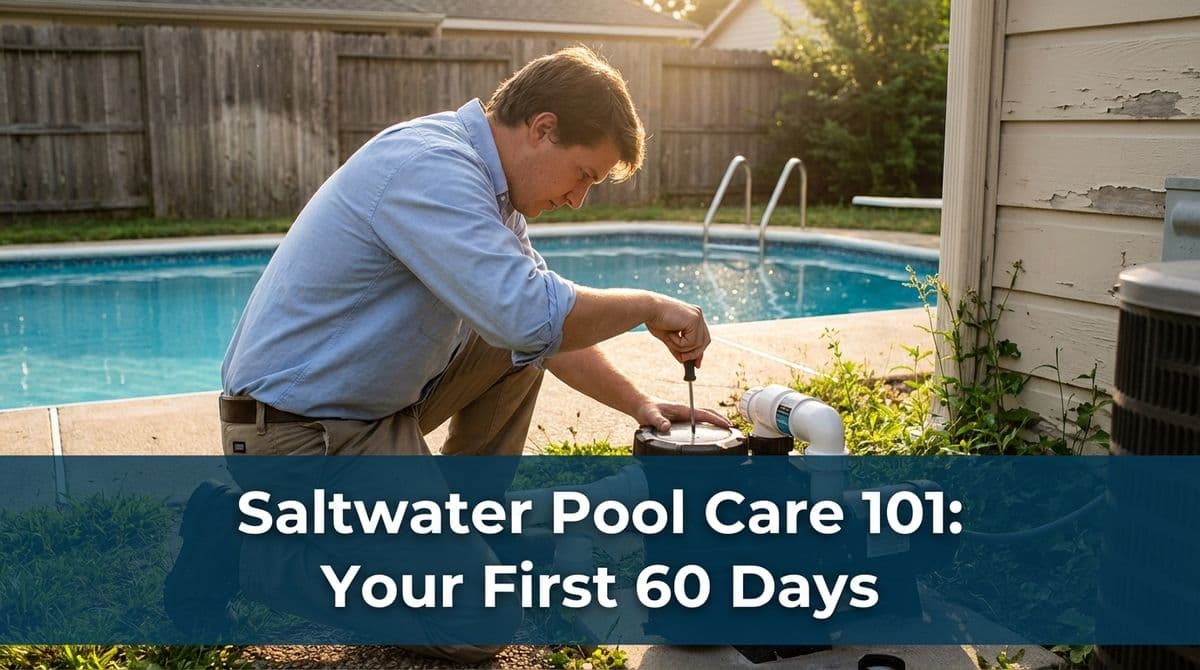
Saltwater Pool Care 101: A Real New-Owner Story
We recently got a call from a new pool owner — let’s call him Brian — who had just finished his backyard build. Brand new pebble pool, brand new equipment, salt system just turned on, and he was ready to set up professional service.
Because the pool was new, we scheduled what we call a pool review: we come out, inspect the equipment, check for leaks, test the water, and make sure everything is set up correctly. During the call, Brian asked a question we hear all the time from new saltwater pool owners:
“They just filled the pool a month ago, I turned on the salt generator today, and my chlorine is high. Do I need chlorine neutralizer, or should I just wait for my service guy?”
His situation is a perfect example of what most new saltwater pool owners can expect in the first 60 days — especially when it comes to chlorine levels, salt cells, floaters, and filters. Let me walk you through how we handled it and what we recommend.
Weeks 1–2: Fresh Fill, Floaters, and High Chlorine
When a brand new pool is filled, the builder or startup tech will often toss in a chlorine floater (tabs) to sanitize the water while everything’s getting balanced and before the salt system is fully dialed in. That’s exactly what happened with Brian’s pool.
A couple of weeks later, he removed the floater, but his chlorine level was still high. His test kit was even telling him to add a chlorine neutralizer. Instead of selling him a bottle of something he didn’t really need, we explained the simpler option:
- Turn off the salt cell (or set output to 0%).
- Let the chlorine naturally drift down over a few days.
- Keep the pump running on its normal schedule for circulation.
In cooler months, chlorine breaks down more slowly, so high levels can linger a bit. Unless it’s dangerously high or causing issues, letting it come down on its own is usually the safest, easiest route.
Bringing the Salt System Online the Right Way
Brian had “just turned on the salt generator today,” which is very common — many homeowners flip it on as soon as the pool looks clear. The first 60 days is when you really learn how your specific salt system behaves in your climate.
Here’s how we recommend easing a new salt system into service:
- Confirm the salt level with a good test before turning the cell on (your salt cell has a target range, usually around 3000–3400 ppm).
- Start with a lower output (30–50%) instead of 100% right away.
- Test chlorine every few days and adjust the output up or down in small steps.
- Remember that water temperature matters: in colder water, cells are less efficient and chlorine lasts longer.
In Brian’s case, we recommended shutting the salt cell off temporarily until that initial “floater chlorine” burned off. Once his levels dropped to a normal range, we’d help him dial in the salt system so it maintains, rather than spikes, the chlorine.
Salt Cells and Tabs: Why We Often Use Both
During the call, Brian said, “It’s a salt pool, so what would we need on site? It’s a salt pool and I just turned on the salt generator… I don’t even know what we need, if anything.” That’s another very common question — many people assume salt = no other chlorine.
Here’s how we explained it to him, and what we typically recommend:
- Your salt cell is the primary source of chlorine once the pool is stable.
- We often use floating tabs in tandem with the cell, especially in our intense summer heat, to help maintain chlorine levels when demand is high.
- Tabs also add a bit of stabilizer (CYA), which helps protect chlorine from the sun — but we don’t want that getting too high.
For many saltwater pools, especially smaller ones like Brian’s 1,100-gallon “spool,” a small floater set low plus a properly adjusted salt system can keep things very steady in the first 60 days and beyond.
First 60 Days: What Chemicals to Keep On Site
We asked Brian if he kept chemicals on site or wanted to use ours off the truck. Since his was a new salt pool, we kept the recommendations simple:
- Muriatic acid – Salt systems tend to nudge pH upward, so you’ll almost always need acid on hand to bring pH back into range.
- Tabs (if recommended for your setup) – A floater with tabs can help support the salt cell when it’s very hot or when bather load is high.
- Basic test kit or strips – So you can spot-check chlorine and pH between service visits.
We told him he could either buy acid himself or let our tech bring a bottle, leave it on site, and use from that bottle each visit. Either way, the goal is the same: keep your pH and chlorine in the sweet spot while your salt system finds its rhythm.
Filter Maintenance Timeline for a Brand New Pool
Brian’s filter had “never” been cleaned because the pool was just a month old. That’s normal, but we still want to know the installation date so we can set reminders. We typically send emails every 4–5 months for filter cleans.
For a new saltwater pool, our general first-60-day filter advice is:
- Know your filter type (cartridge, DE, or sand).
- Plan the first full clean or backwash around 4–5 months after startup, sooner if you notice pressure rising or flow dropping.
- Keep the area around the equipment pad clean so the filter and pump can “breathe.”
Even though Brian’s pool was brand new, we still documented “filled about a month ago” during the review so we could track when that first filter service would be due.
What Our Pool Review Covers for New Salt Pools
When Brian asked, “Can your tech just come fix the chlorine when he’s here Tuesday?” we had to clarify something important: our first visit was a review only. That means the tech is authorized to:
- Turn equipment on and off
- Inspect the system for leaks or obvious issues
- Check for algae or cloudy water
- Collect a water sample and photos for the account
If everything looks good and there are no repairs needed, we then finalize the service agreement and schedule ongoing maintenance. For a new salt pool owner, that ongoing care is what keeps chlorine steady, the salt cell happy, and your water sparkling.
New Salt Pool? Here’s What to Expect in Your First 60 Days
If you’ve just finished your build and you’re in those first 60 days, here’s a quick checklist based on what we walked through with Brian:
- Don’t panic over temporarily high chlorine after startup — you can usually turn off the salt cell and let it drift down.
- Use tabs in a floater alongside your salt system if recommended for your pool and climate.
- Keep acid on site and get comfortable with basic pH and chlorine testing.
- Know when your filter was installed and plan the first clean around the 4–5 month mark.
- Schedule a professional pool review to make sure your new equipment and water chemistry are set up correctly.
Those early weeks are when you get to know your salt system’s personality. With a little guidance — and a good service team watching your equipment and water — your new saltwater pool will settle into an easy, low-stress routine.